



TRAMA
2023
-
ongoing
Artificial Intelligence
Digital Curation
TRAMA “Cultural transformations. Intangible heritage and new digital-driven professional profiles” is a national project dedicated to cultural transformation and the digital valorisation of intangible heritage, developed within the CHANGES programme and funded by the European Union – NextGenerationEU. At a time when digital technologies are increasingly shaping the ways in which intangible heritage is preserved, transmitted, accessed, and experienced, TRAMA aims to map innovative practices and emerging digital skills, monitor ongoing trends within the cultural ecosystem through the use of artificial intelligence, and experiment with training pathways and applied pilot projects.
The project’s objective is to support heritage custodians, cultural institutions, creative industries, educators, and policy-makers in understanding and managing the current digital transformation, contributing to the development of informed strategies for the safeguarding and enhancement of intangible cultural heritage. To address these challenges, TRAMA develops and tests an articulated set of operational and methodological tools designed to accompany cultural ecosystem actors in processes of analysis, design, and strategic decision-making. Among these, the ICH Digital Valorization Canvas, designed and implemented to support different stakeholders in the analysis of digital projects and the planning of strategic concepts, represents one of the project’s core components. Conceived as a tool for reflection and co-design, the Canvas connects cultural, technological, and organisational dimensions, fostering a structured reading of existing practices and the development of new trajectories of growth.
Within this framework sits the collaboration with the Gianfranco Ferré Research Centre, which constitutes Pilot 1 of the project. Conceived as a field-based experimentation, the pilot was designed to test the effectiveness of TRAMA’s tools within a real and highly qualified context. The hybrid nature of the Centre – both archive and active research space – provided a particularly fertile ground for assessing the tools’ ability to identify, describe, and activate the intangible heritage linked to design practice.
The programme unfolded through two complementary workshops. The first focused on analysing the Research Centre’s existing practices and bringing to light the intangible heritage connected to Gianfranco Ferré’s design methodology, highlighting assets such as oral testimonies, knowledge, processes, and operational logics that are often not formally codified. The second workshop shifted towards a design-oriented perspective, guiding participants in the construction of future visions and strategic concepts capable of translating the archive’s intangible heritage into strategies, projects, and concrete directions for the digital valorisation of cultural heritage.
The project’s objective is to support heritage custodians, cultural institutions, creative industries, educators, and policy-makers in understanding and managing the current digital transformation, contributing to the development of informed strategies for the safeguarding and enhancement of intangible cultural heritage. To address these challenges, TRAMA develops and tests an articulated set of operational and methodological tools designed to accompany cultural ecosystem actors in processes of analysis, design, and strategic decision-making. Among these, the ICH Digital Valorization Canvas, designed and implemented to support different stakeholders in the analysis of digital projects and the planning of strategic concepts, represents one of the project’s core components. Conceived as a tool for reflection and co-design, the Canvas connects cultural, technological, and organisational dimensions, fostering a structured reading of existing practices and the development of new trajectories of growth.
Within this framework sits the collaboration with the Gianfranco Ferré Research Centre, which constitutes Pilot 1 of the project. Conceived as a field-based experimentation, the pilot was designed to test the effectiveness of TRAMA’s tools within a real and highly qualified context. The hybrid nature of the Centre – both archive and active research space – provided a particularly fertile ground for assessing the tools’ ability to identify, describe, and activate the intangible heritage linked to design practice.
The programme unfolded through two complementary workshops. The first focused on analysing the Research Centre’s existing practices and bringing to light the intangible heritage connected to Gianfranco Ferré’s design methodology, highlighting assets such as oral testimonies, knowledge, processes, and operational logics that are often not formally codified. The second workshop shifted towards a design-oriented perspective, guiding participants in the construction of future visions and strategic concepts capable of translating the archive’s intangible heritage into strategies, projects, and concrete directions for the digital valorisation of cultural heritage.
Pilot project aimed at bringing to light the intangible heritage of Gianfranco Ferré’s design methodology, through oral testimonies, knowledge, processes, and non-formalised practices.
Credits
Partners
Scientific Direction: Davide Spallazzo, Department of Design, Politecnico di Milanollazzo,
Project Team: Eleonora Lupo, Federica Vacca, Chiara di Lodovico, Federica Rubino - Design Department
Gianfranco Ferré Research Center's Team: Ilaria Trame, Emanuela Di Stefano, Angelica Vandi, Greta Rizzi, Bruna Rigato
Funding: PNRR Italian National Recovery and Resilience Plan, Mission 4, Component 2, Investment Line 1.3, as part of the “CHANGES – Cultural Heritage Active Innovation for Next Generation Sustainable Society” programme, SPOKE 2 - financed by the European Union – NextGenerationEU
RELATED RESEARCH PROJECTS
 Digital Curation
Education Research
Unfolding Gianfranco Ferré
An innovative educational pathway enhancing Ferré’s legacy
2025
Digital Curation
Education Research
Unfolding Gianfranco Ferré
An innovative educational pathway enhancing Ferré’s legacy
2025
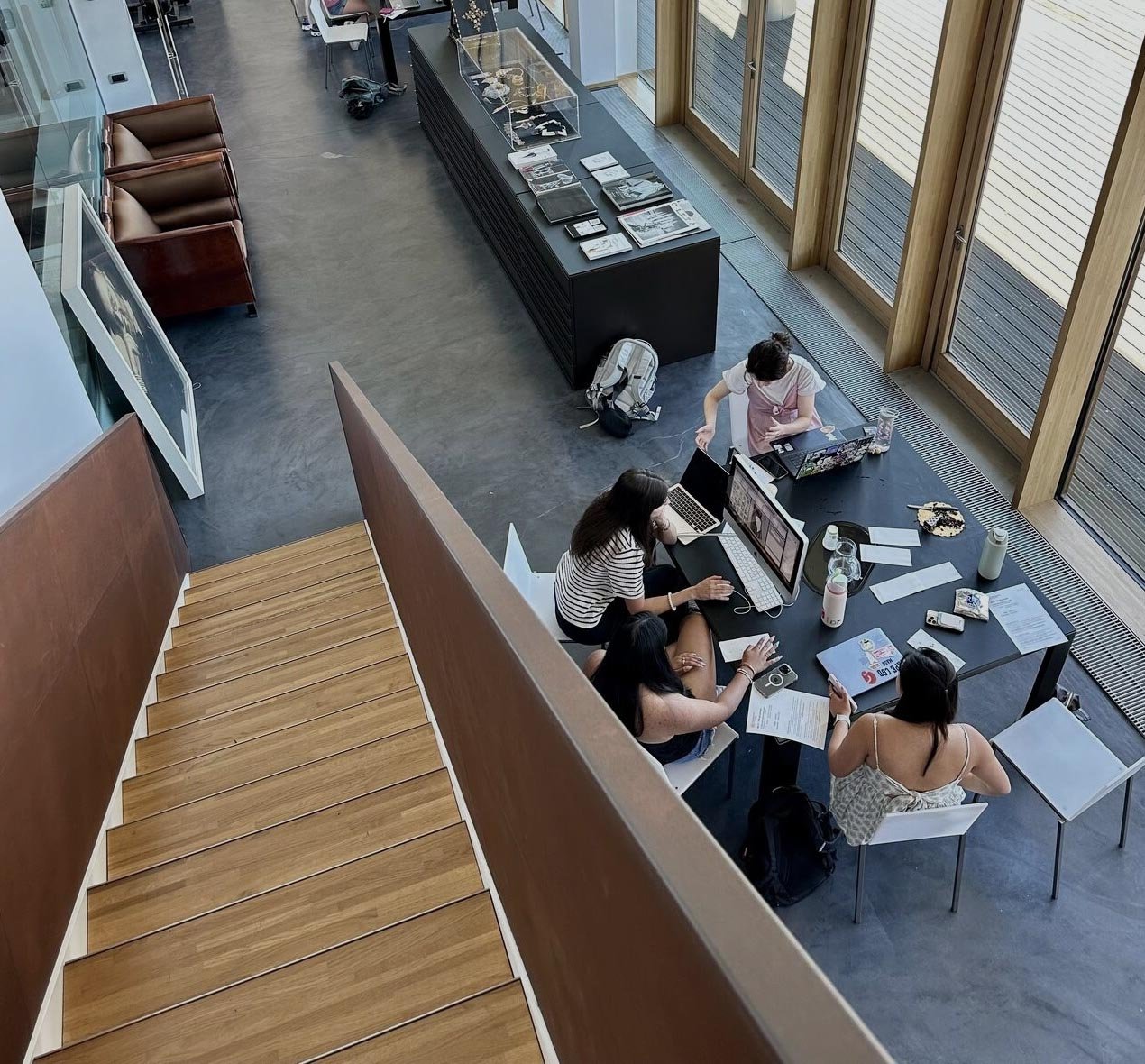 Academic Residency
Digital Curation
High-End Experiences through Italian Design & Technology
Academic Residency developed in collaboration with Northeastern University
2025
Academic Residency
Digital Curation
High-End Experiences through Italian Design & Technology
Academic Residency developed in collaboration with Northeastern University
2025
 Education Research
Reverse Engineering
Ferré's Lexicon
Project developed in collaboration with the Laboratory of Fundamentals of Fashion Design, Fashion Design programme, Politecnico di Milano
2024
Education Research
Reverse Engineering
Ferré's Lexicon
Project developed in collaboration with the Laboratory of Fundamentals of Fashion Design, Fashion Design programme, Politecnico di Milano
2024
 Education Research
Rematerialisation
Design with Memory
Thesis Research Internship investigating knitwear as a field for the re-materialisation of a Ferré archival garment
2024
- 2025
Education Research
Rematerialisation
Design with Memory
Thesis Research Internship investigating knitwear as a field for the re-materialisation of a Ferré archival garment
2024
- 2025
