

IKAT / CHINÉ,
Decorating Textiles
Villa Sucota / Como
Antonio Ratti Foundation
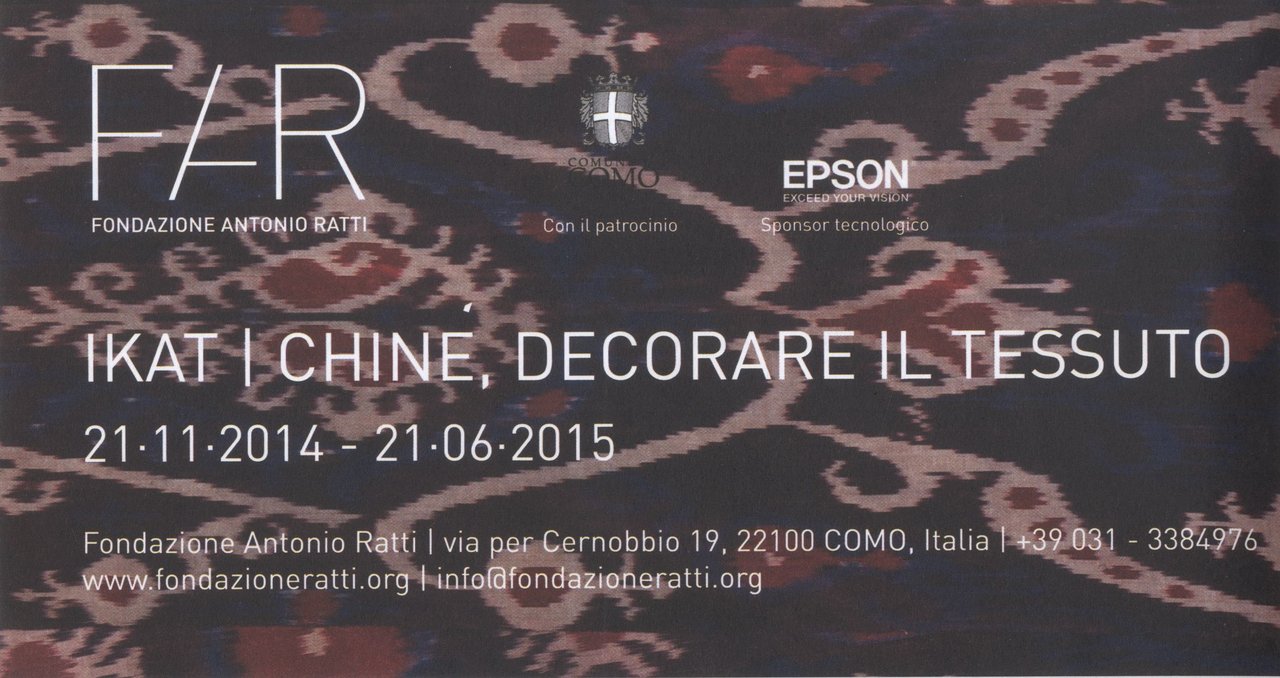
The exhibition examines ikat and chiné fabrics – two terms that may sound enigmatic to a non-specialist audience, yet refer to beautiful patterns characterised by their “blurred” contours. This distinctive effect originates from an ancient dyeing technique used in countries far distant from one another. In ikat, the softly blurred designs are achieved by tightly binding sections of the warp or weft threads. The subsequent dye baths, which affect only the unprotected areas of the threads, constitute a classic example of resist dyeing. Only after this process is the loom prepared, using threads that therefore already carry the “design”. Eighteenth-century European chiné adapts this technique; from the early nineteenth century onwards, in order to reduce production time and costs while preserving the allure of the blurred effect, the method shifts to the direct printing of the warp threads, followed by weaving.
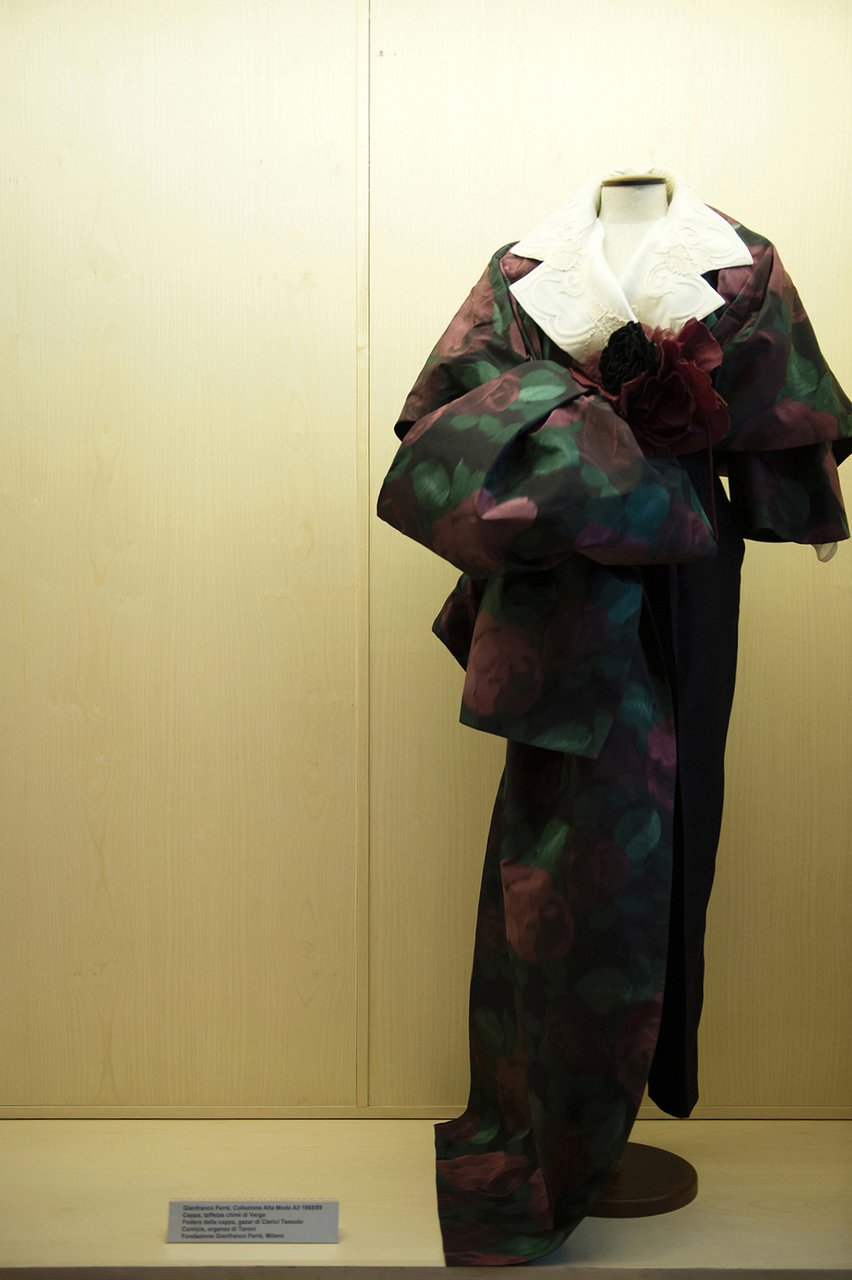
Originally the result of painstaking manual labour, and later interpreted in an industrial key in Europe from the nineteenth century onwards, chiné is today a point of pride for several manufacturers in the Como area. For the exhibition, these companies are lending warp-printed fabrics produced in recent decades to meet the demands of international haute couture.
Credits
OTHER EXHIBITIONS