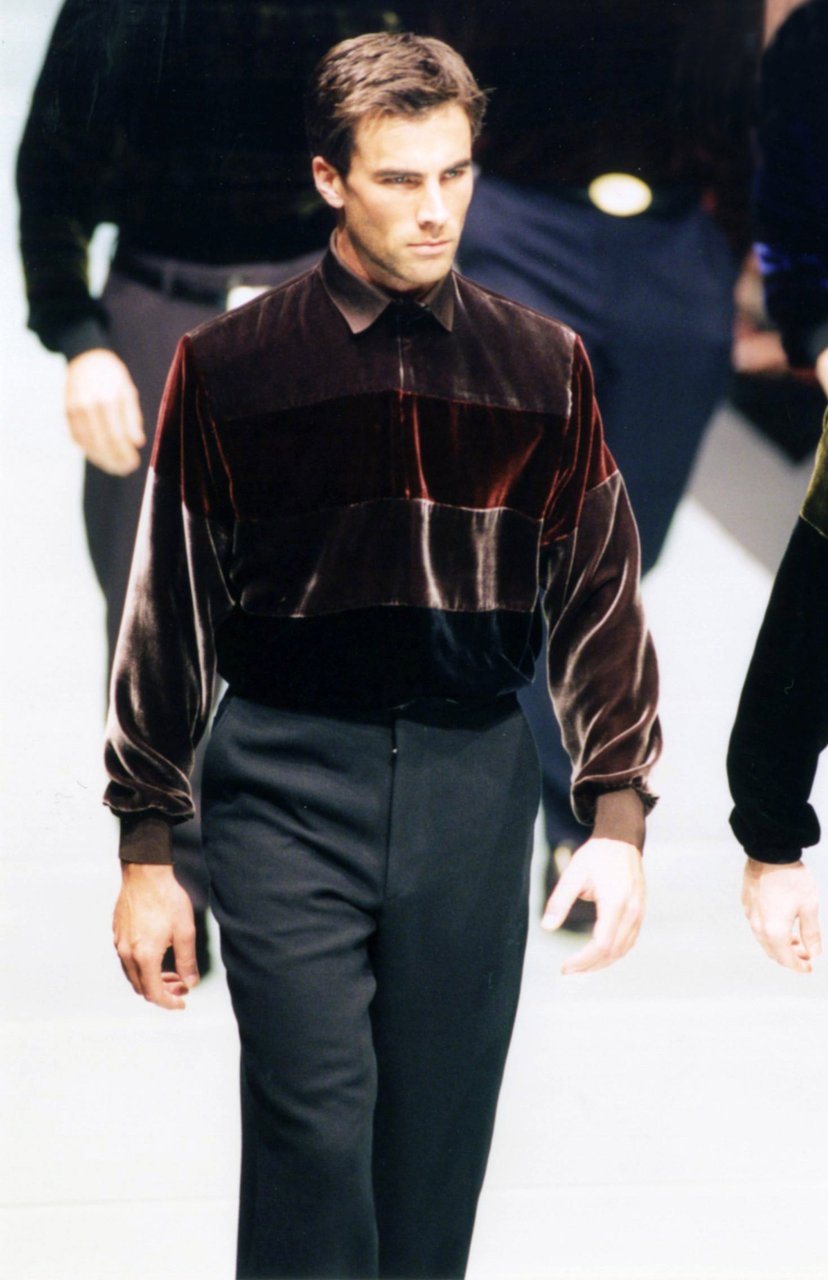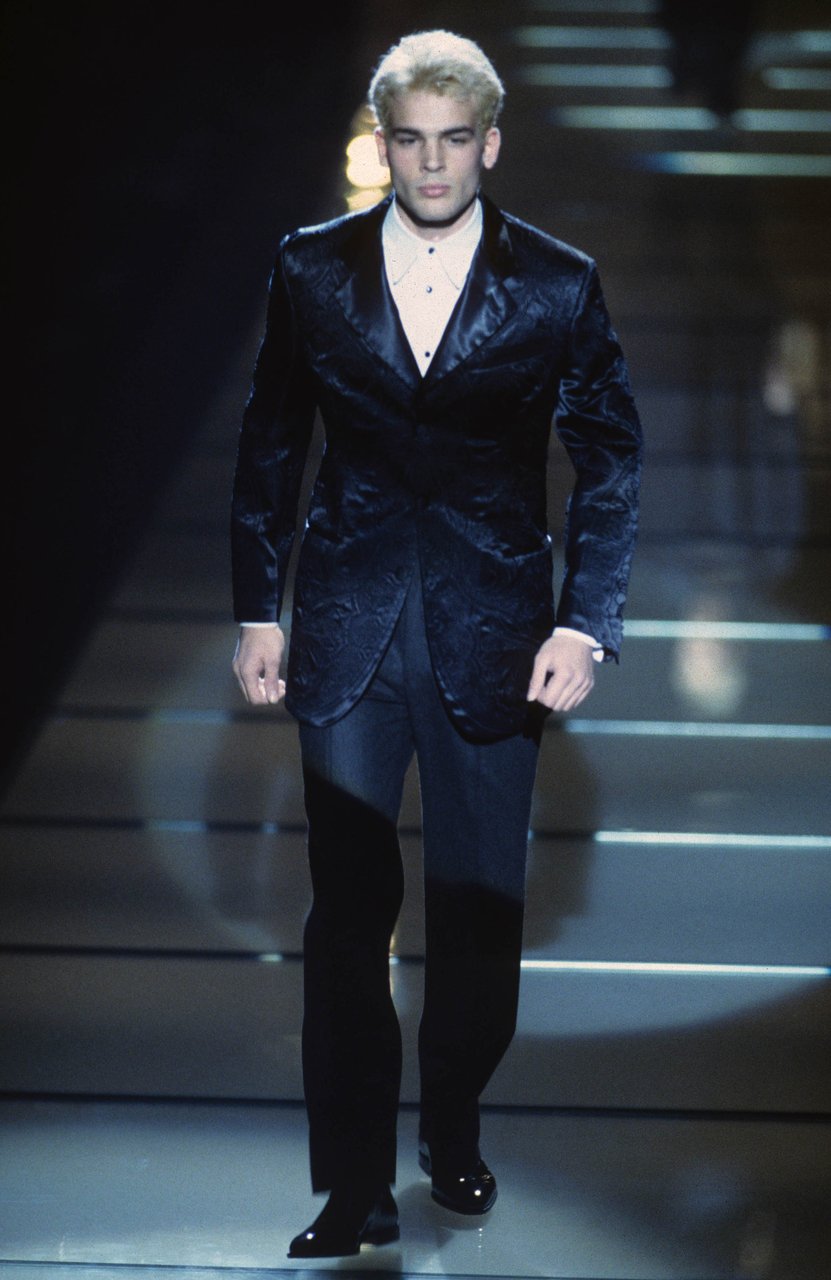


Men's Ready-to-wear
Spring/Summer
“What does it mean to design for men, what behaviours and values are implied by clothing: this is a reflection I have been refining over time. Aware that analysis and deliberate excess distance us from our culture, I have worked on the flexibility of the traditional sartorial vocabulary. By increasingly emphasising the relationship between form and material, I have intensified technological research into weaving and finishing, experimenting with new combinations and transformations of materials. All in order to satisfy classical canons, while adapting them to contemporary, elastic forms that respond to the new dynamism of men and to their rooted need to like themselves”.
Gianfranco Ferré
1996
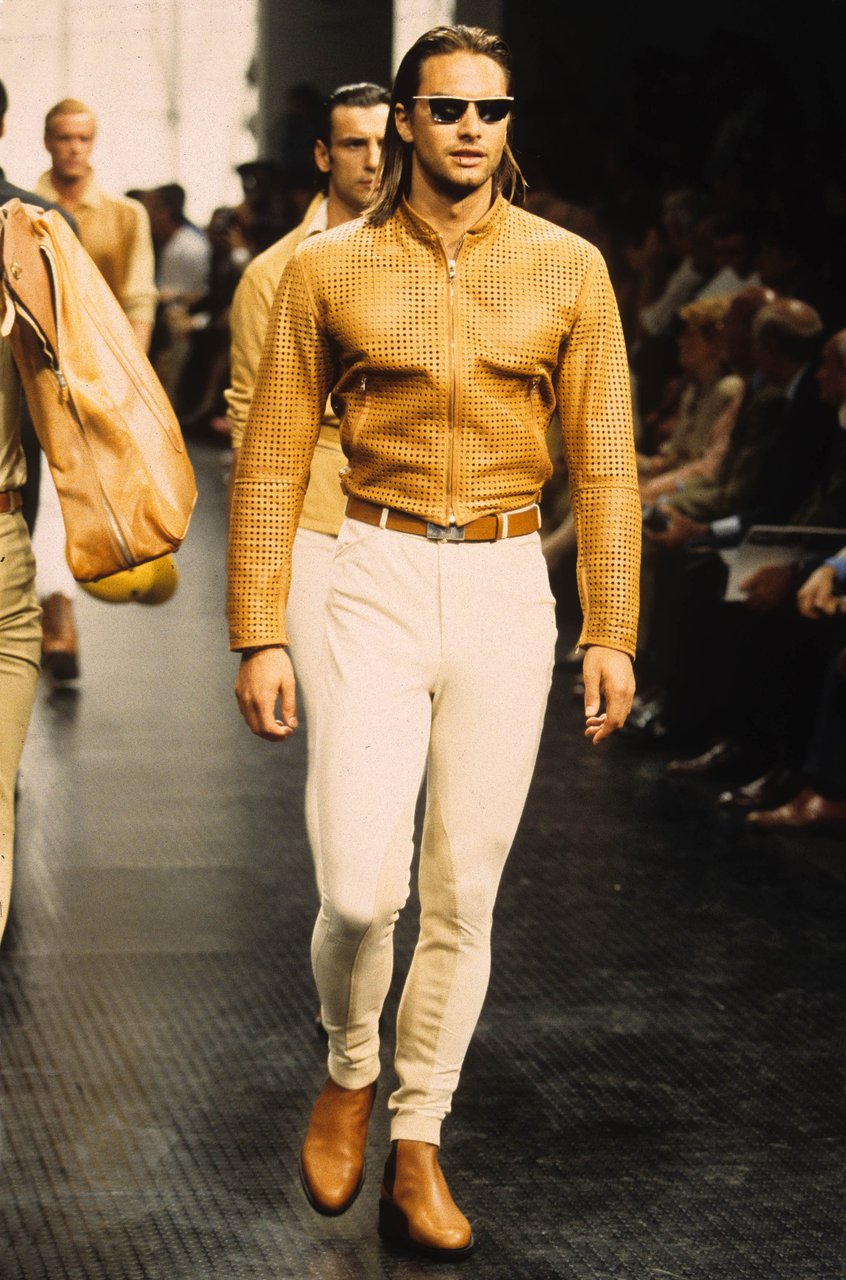
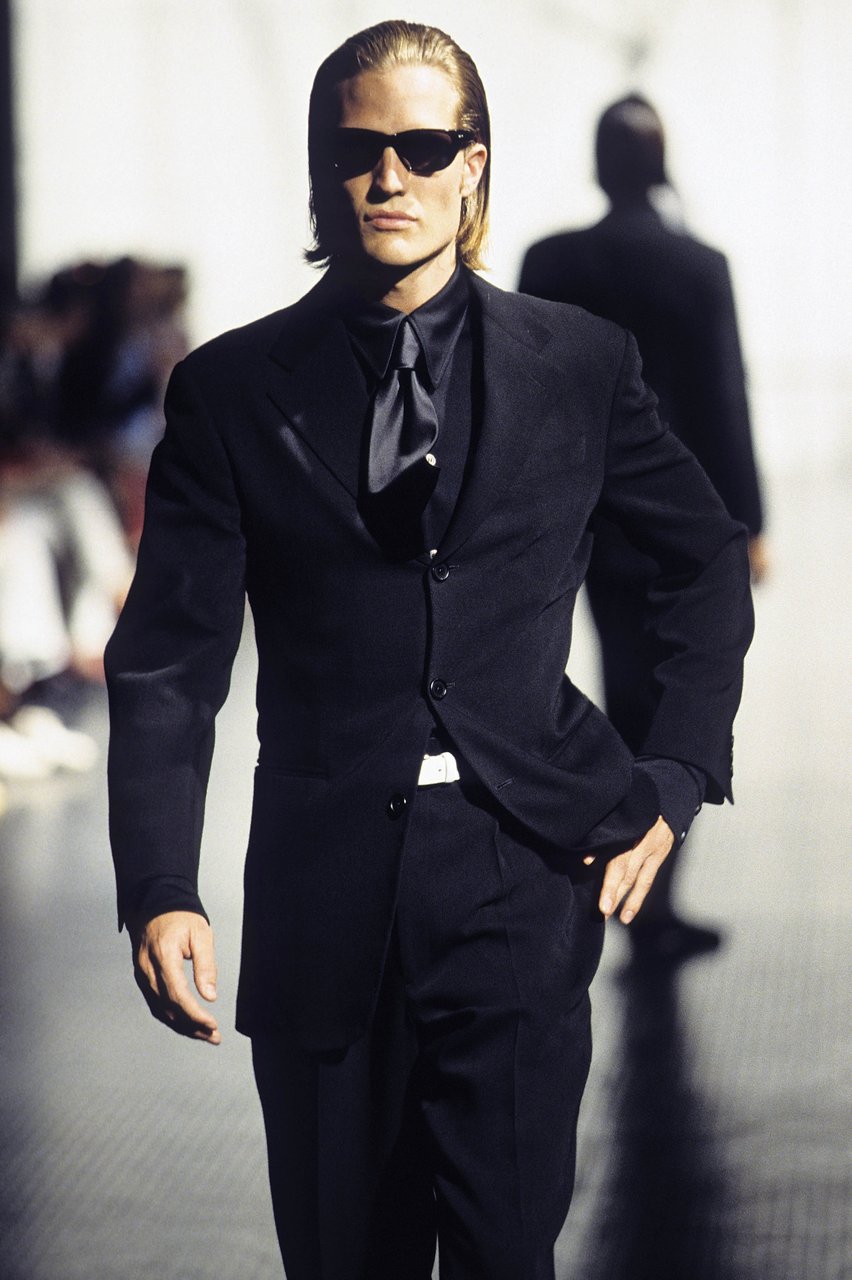
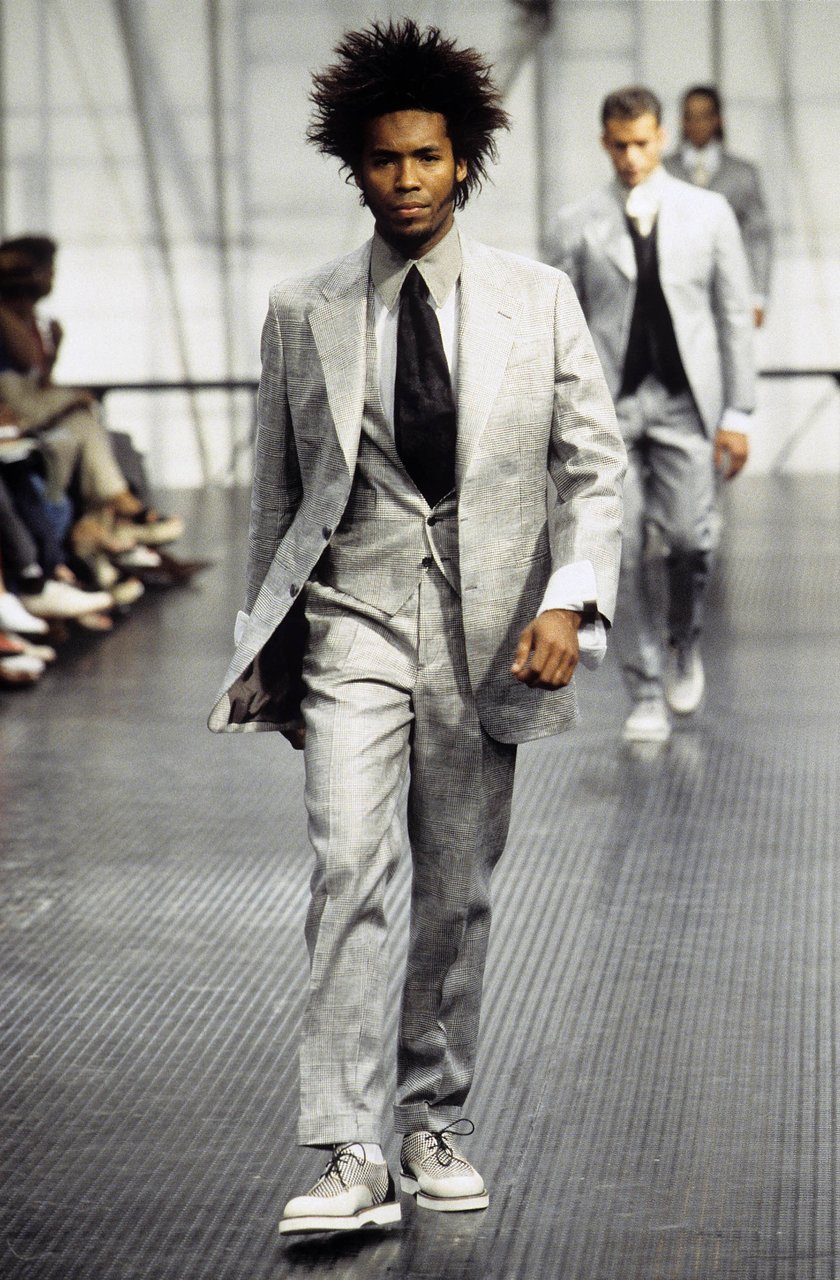
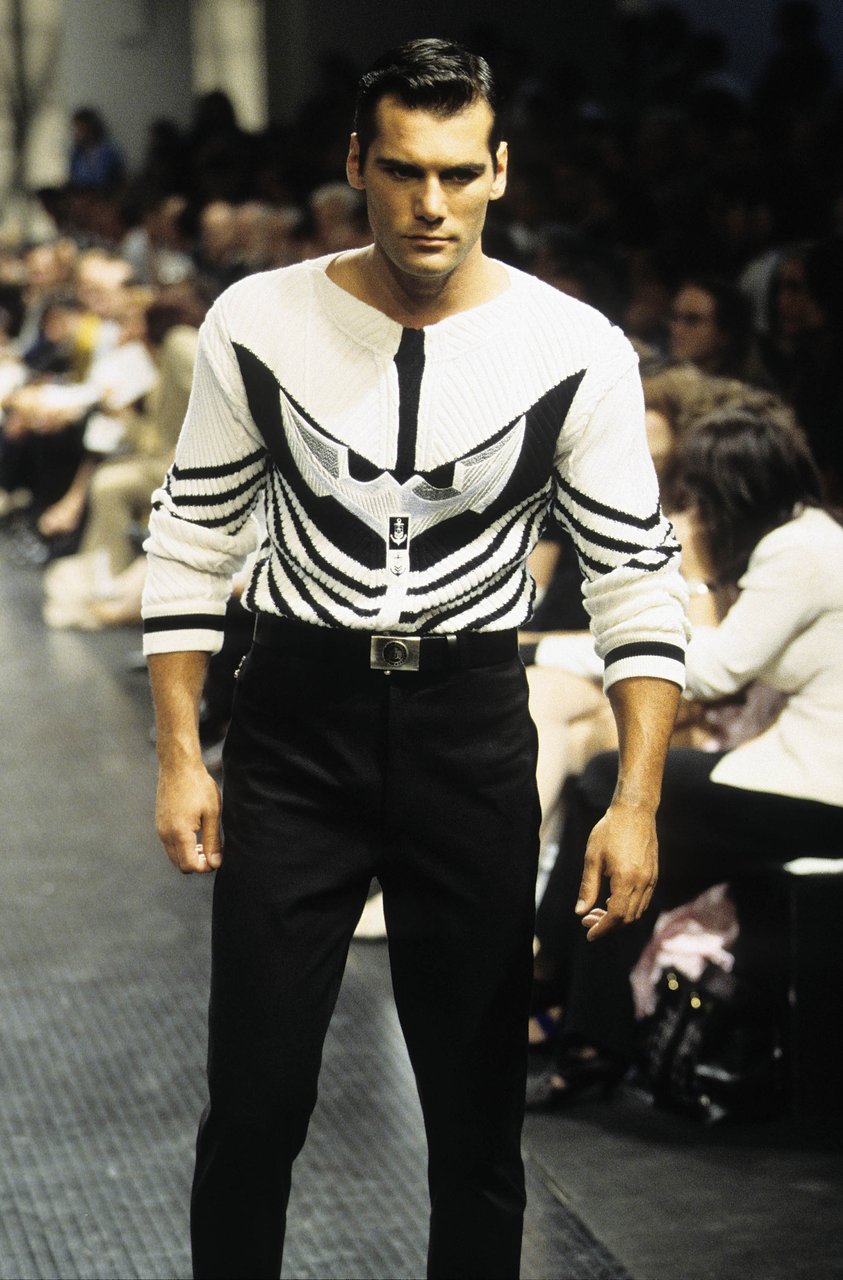
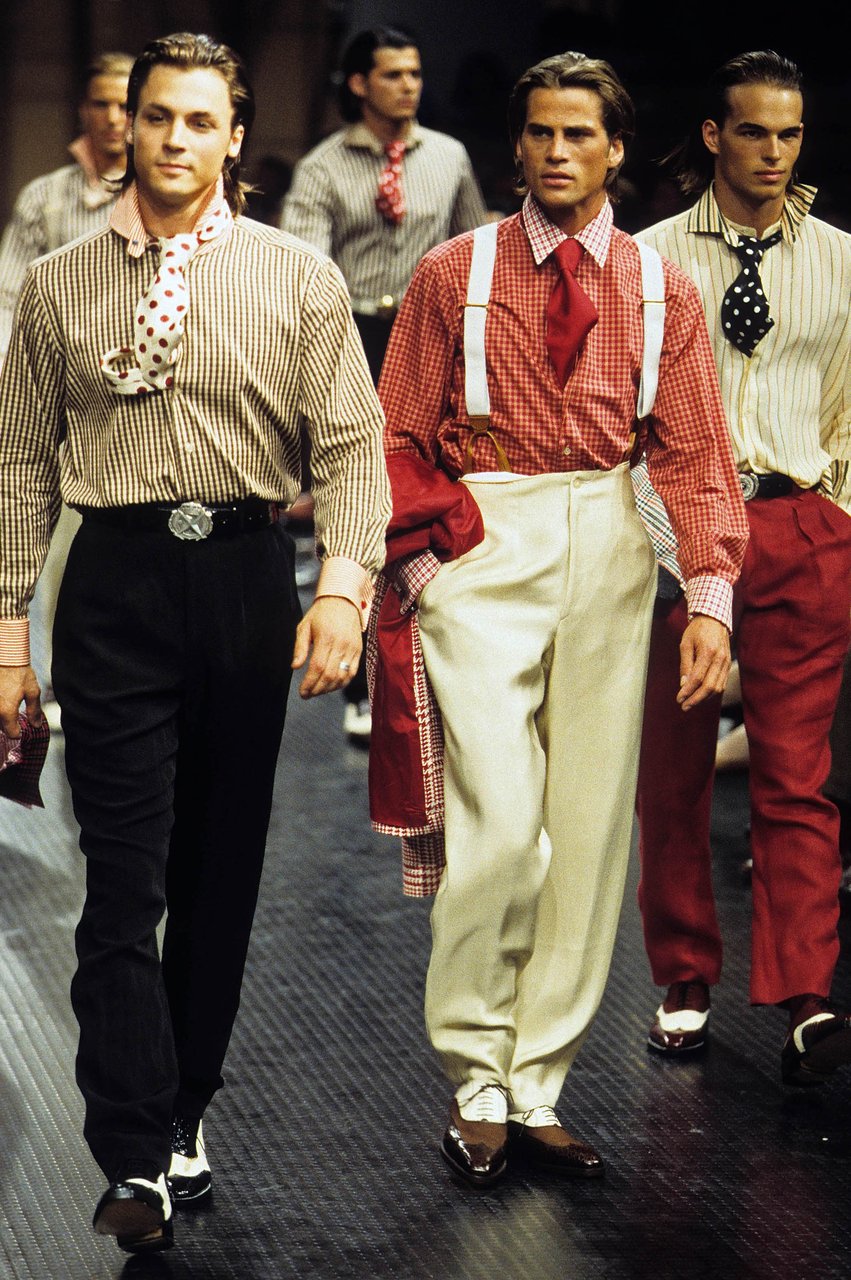
Form. A balance of opposites. The jacket, while respecting the most elementary and determined typologies of menswear, changes its consistency: soft and feather-light in naturally crinkled triple crêpe; compact and essential in stretch wool; shorter, smaller and close-fitting in calendered linen. Heavy knitted fabrics in viscose and nylon accentuate a fluid, cascading effect.
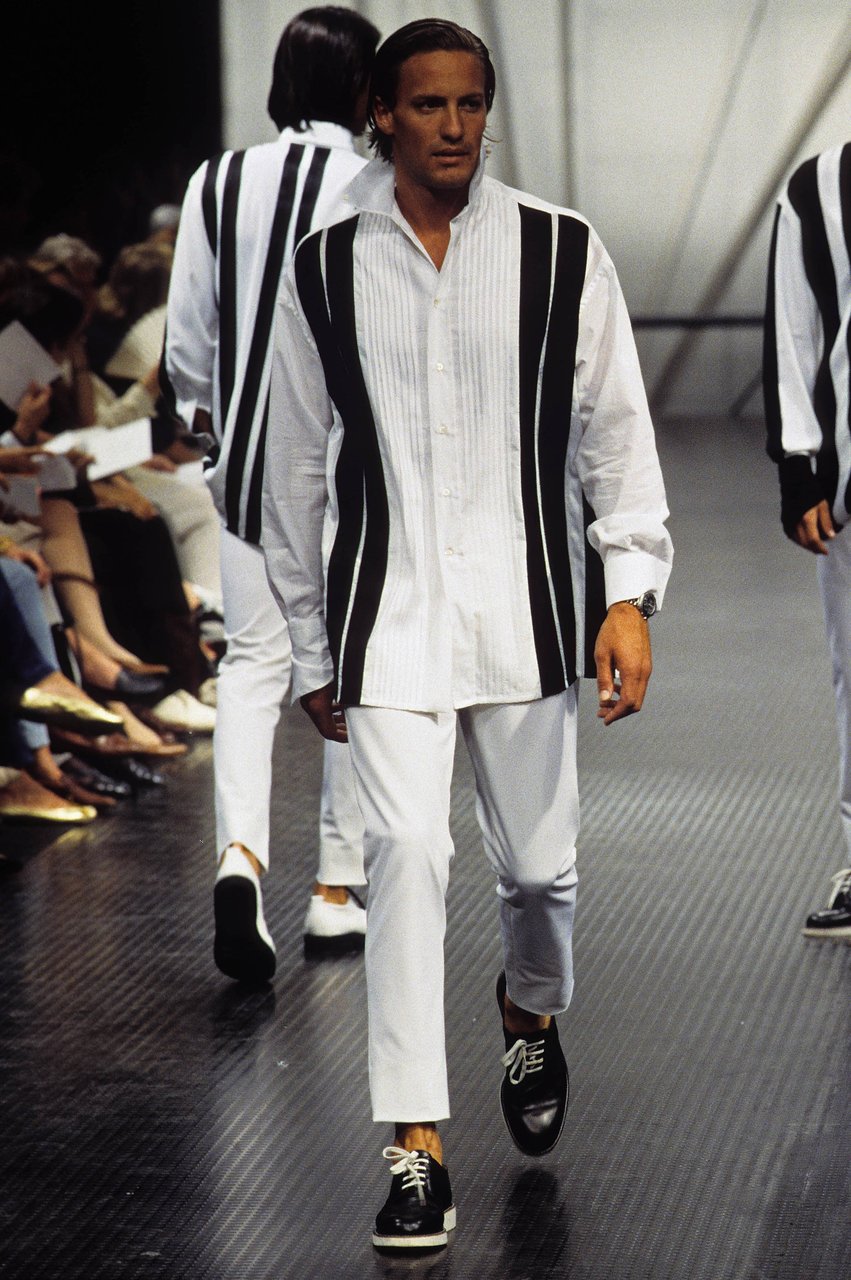
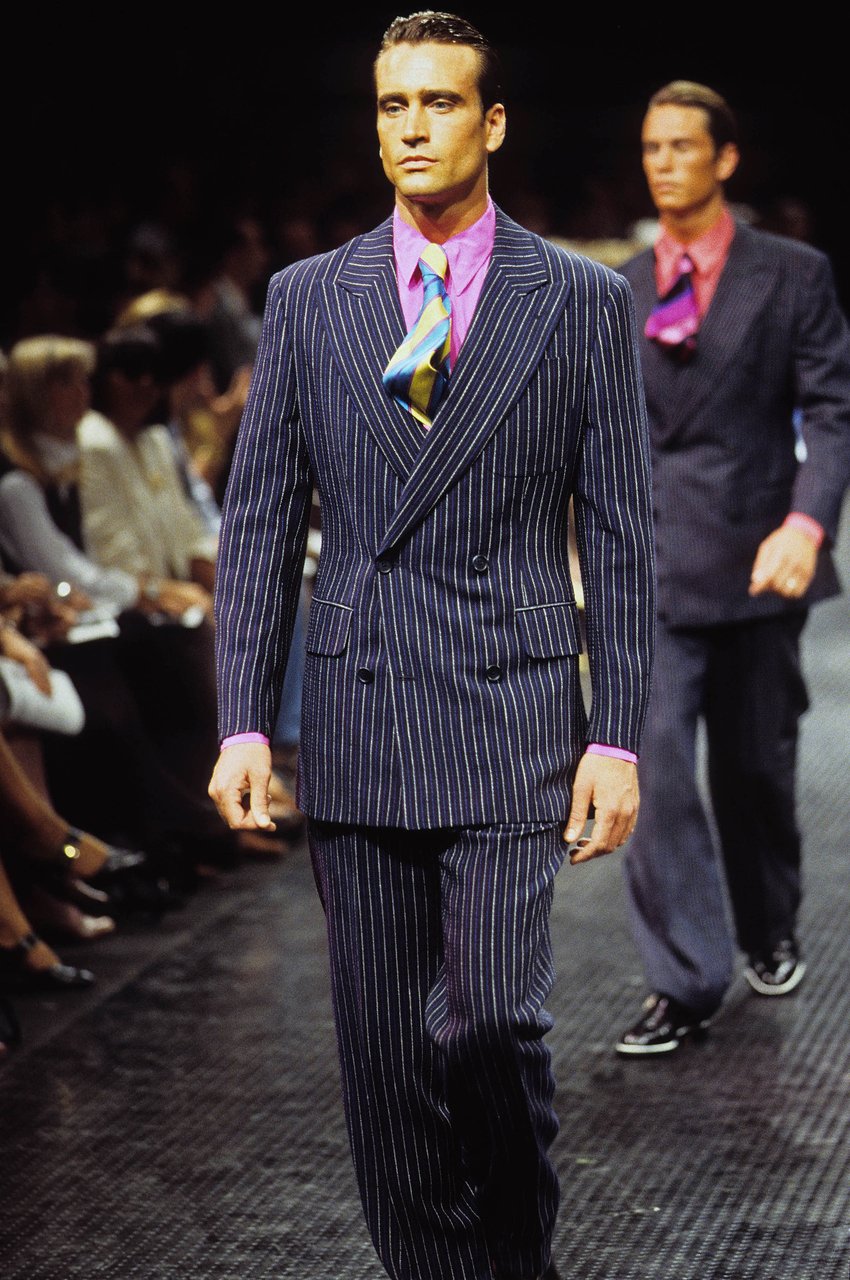
Colour. A range of ultra-neutrals, from white to sand, through to an inviting toasted hazelnut tone. The silence of grey, the depth of black and blue. Decorative accents of red. Graphic signals become more explicit: bold black-and-white checkerboards; oversized chalk and charcoal stripes for shirts, constructed through specific patchwork processes; giant, worked Prince of Wales checks for Casino-style jackets; neon pinstripes for night-time suits inspired by Portofino; white and blue maritime stripes.
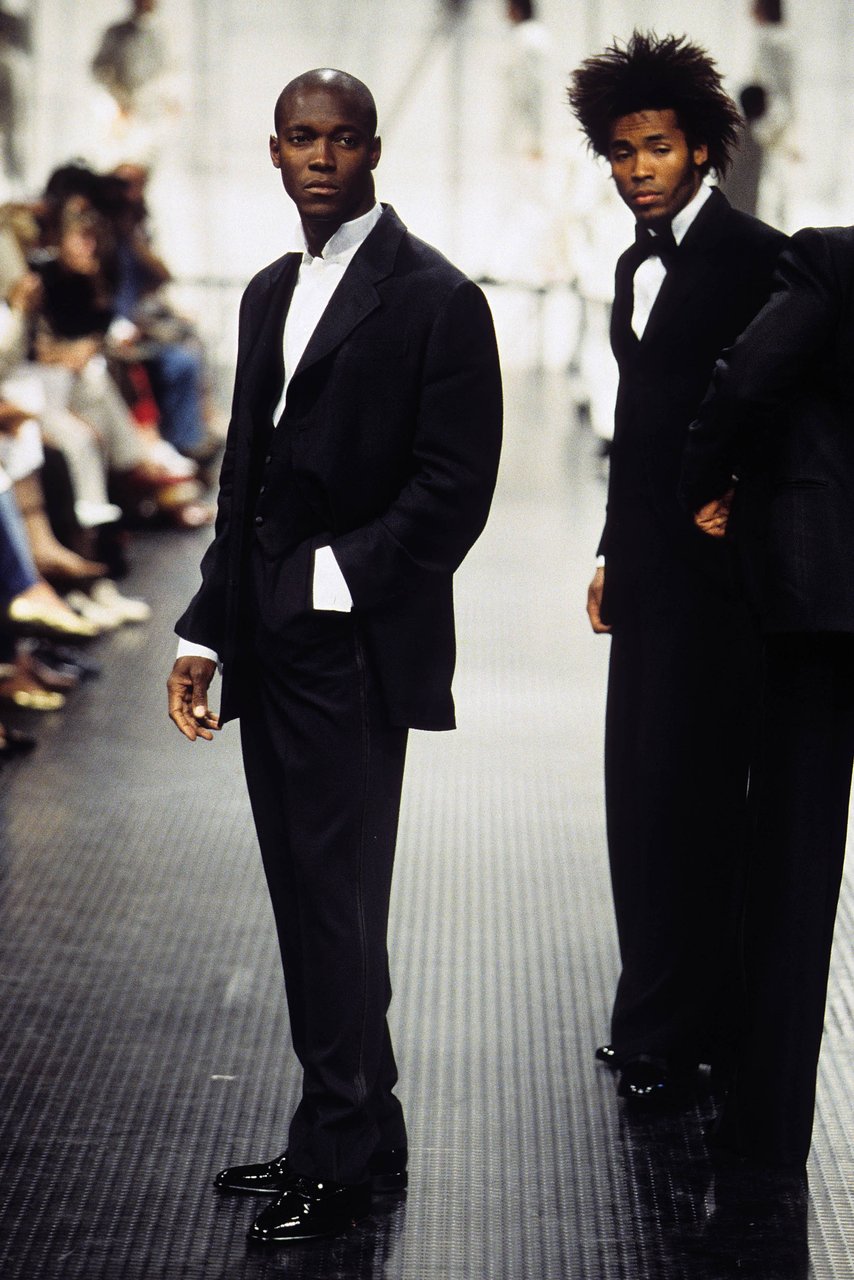
Uniform. An impeccable, familiar lexicon expressed through total black, heightened by the white poplin shirt in stretch. The comfort of a work uniform, with a sense of adjusted provisionality, in sand-coloured or brown crêpe suits closed at the neck with a small external buttonhole. The elegant practicality of foldable sport jackets in parachute canvas, with calibrated gussets and volume. Cotton sateen grey suits and dense, full-bodied pinstripes that move beyond mere formalism to reach the roots of tradition.
Excerpts from the collection press release
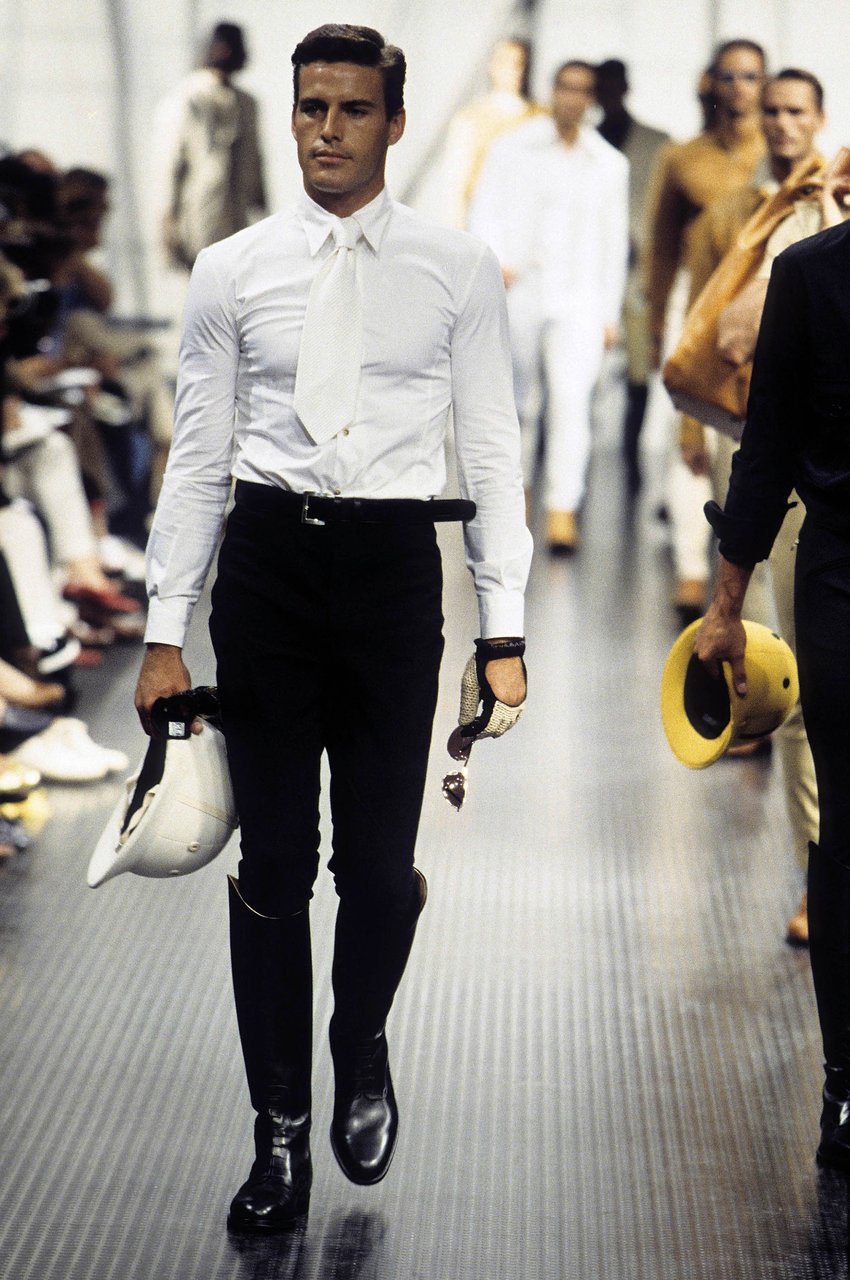
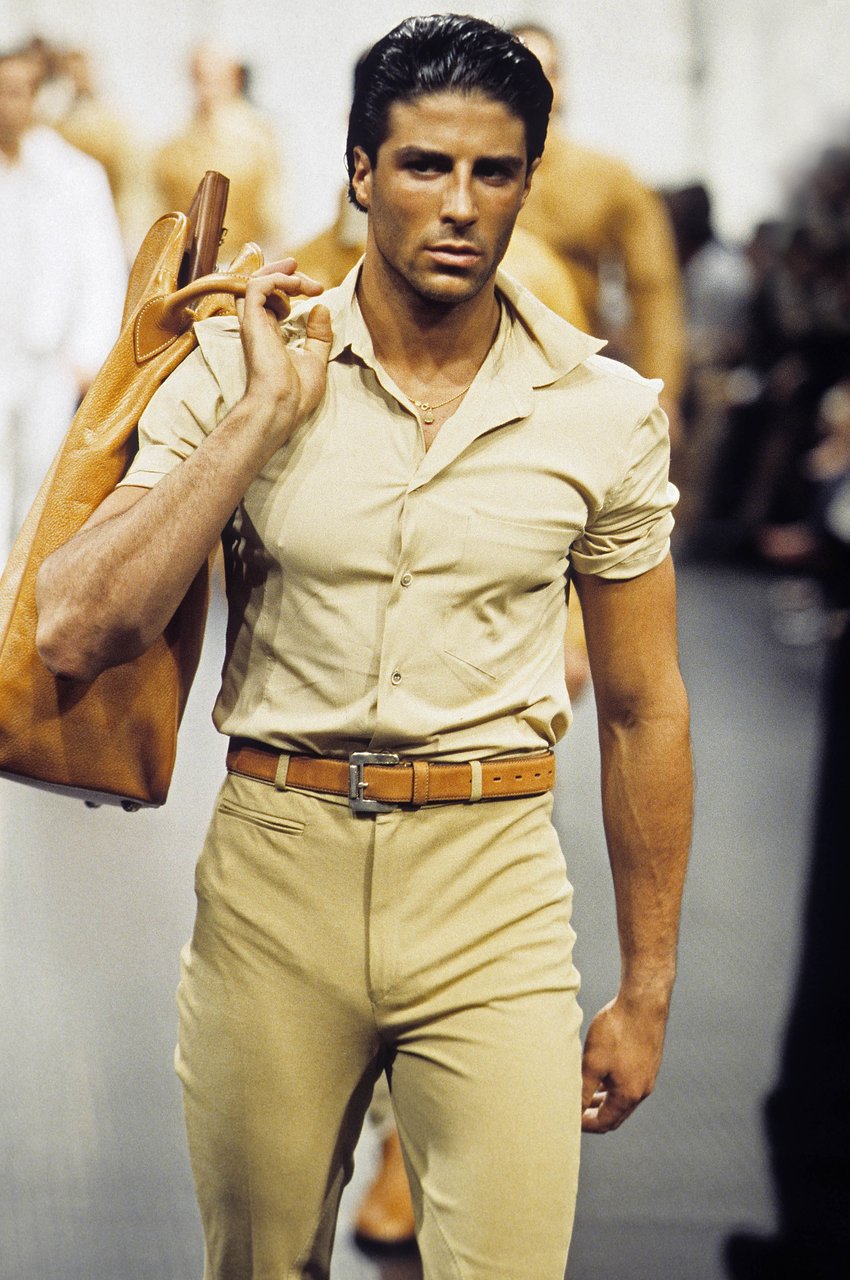
Men's Ready-to-wear
Fall/Winter
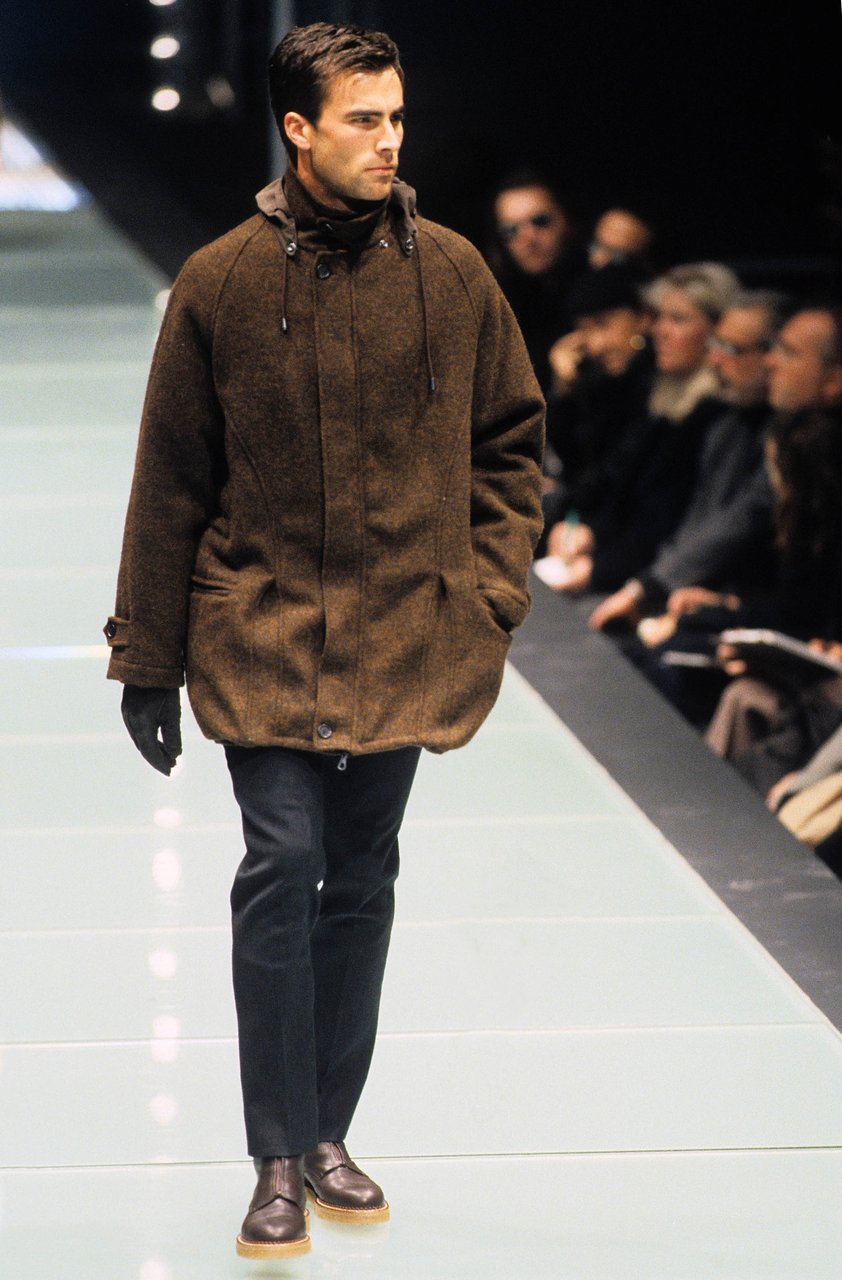
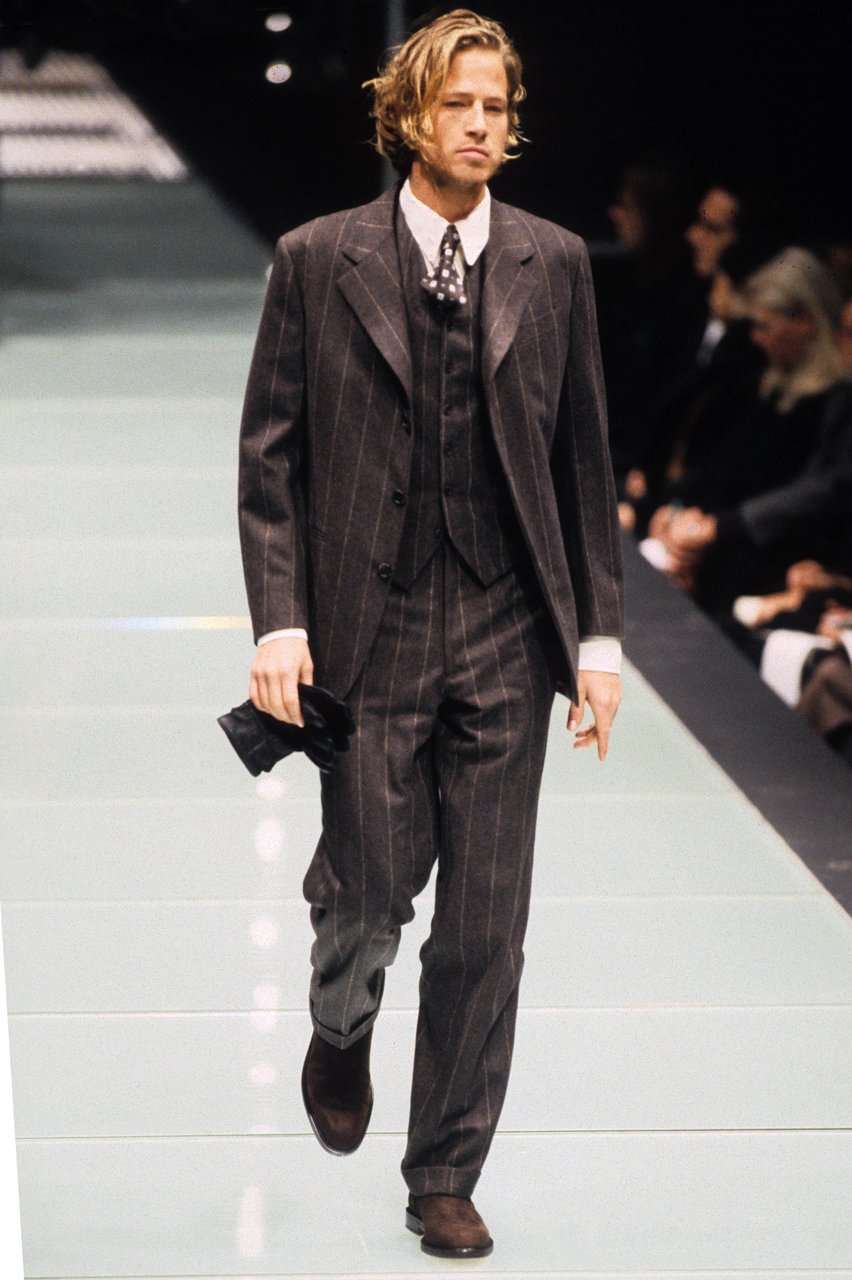
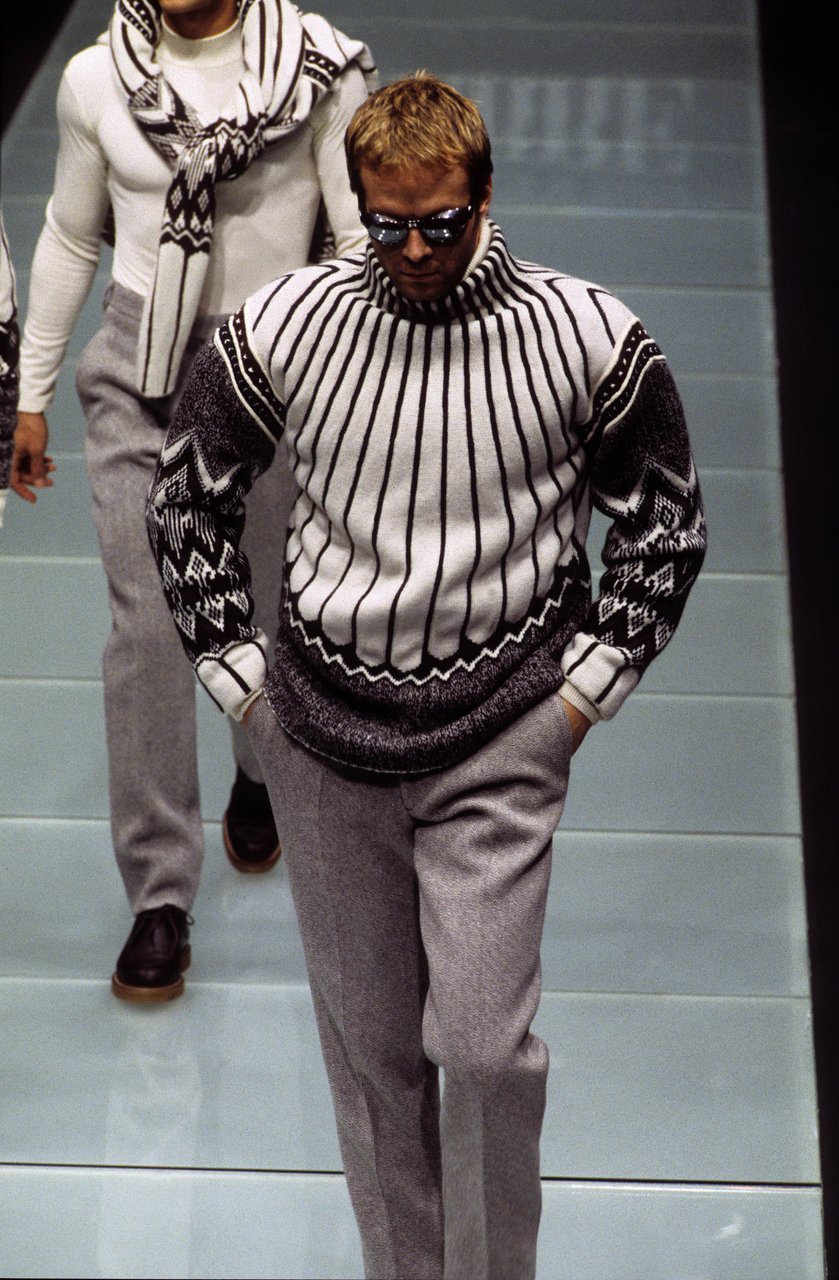
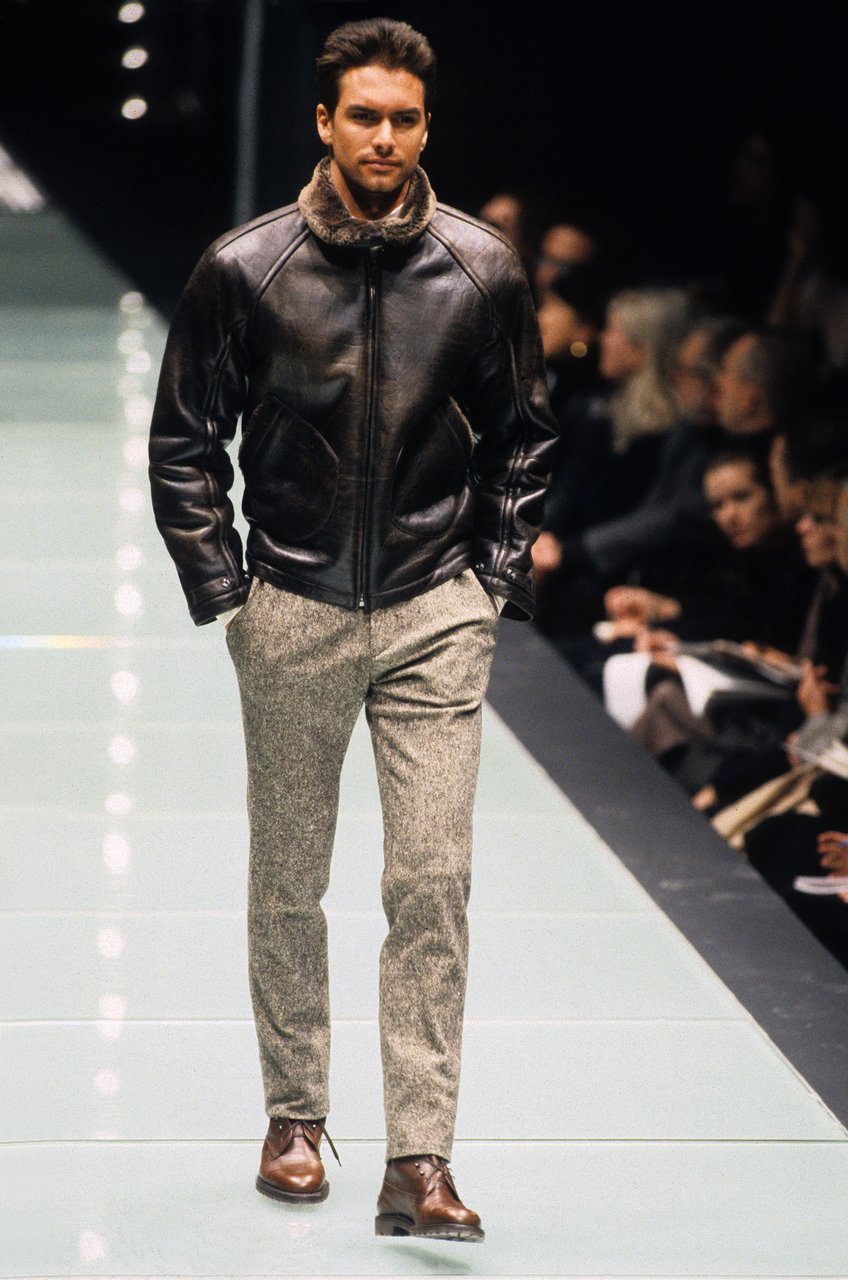
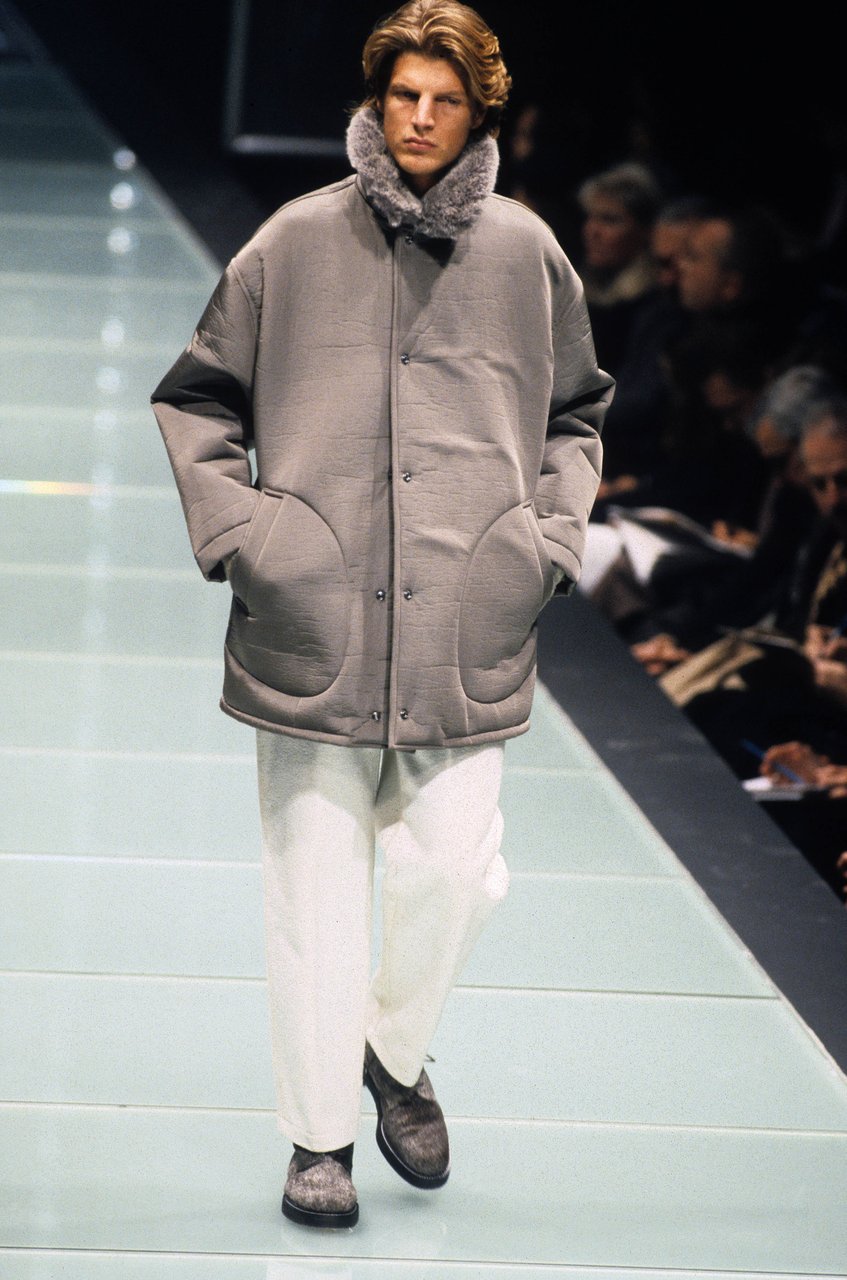
“In my opinion, the need for ease and practicality is today the strongest sign of men’s dressing. All barriers fall between formal and informal, between sports fabric and official attire, because it is the way these formularies are interpreted and adapted to personality that determines the difference between moments and occasions. In order to construct garments with true ease and absolute functionality, I have also deepened my research into the technology of sportswear and uniforms, bringing them back into everyday clothing”.
Gianfranco Ferré
1996
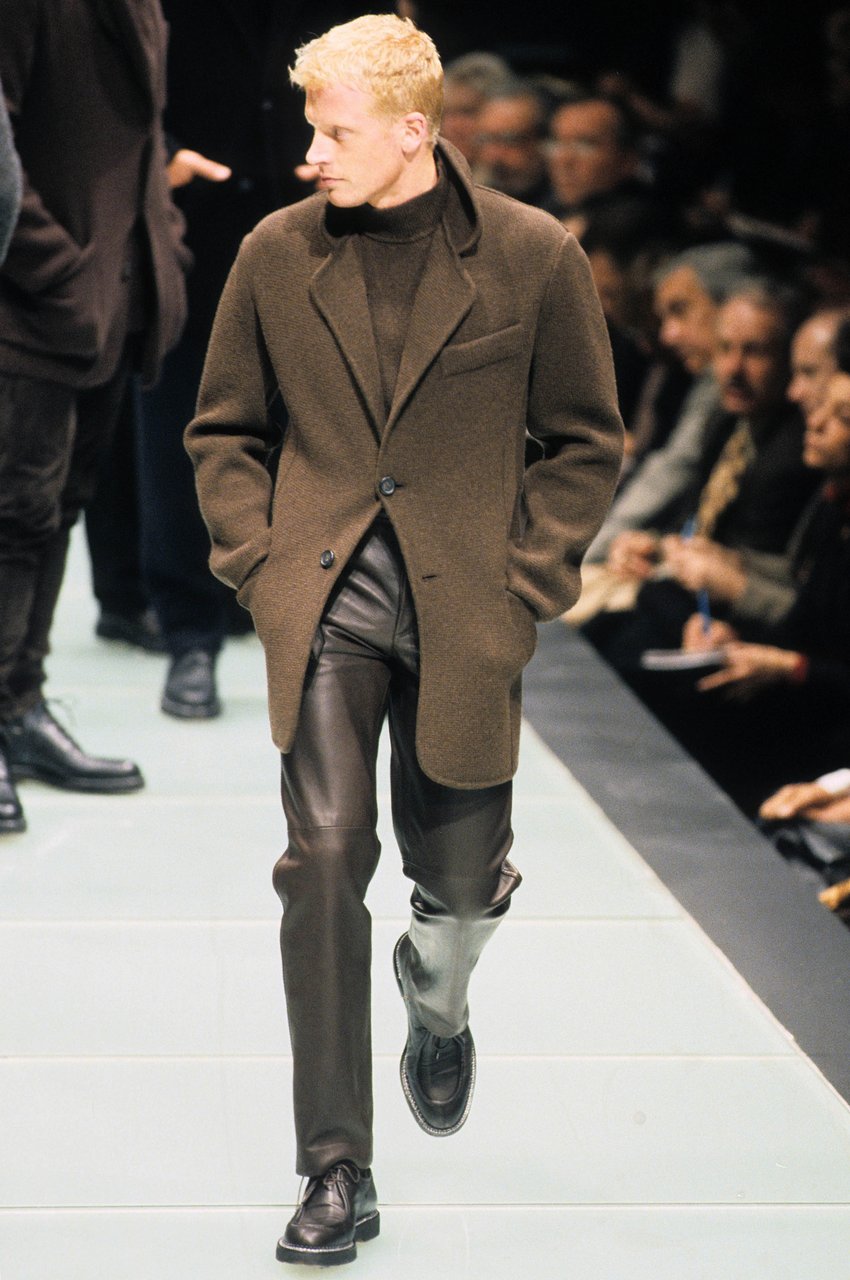
Form. The figure is relaxed and at the same time slender, slightly wider toward the bottom. As in sporting and military tradition, jackets are more comfortable at the hips, where functional pockets are placed. Even if the waist is lightly marked, everything is less rigid and constricting, resting naturally on the body.
Research. Structural modifications applied to the most traditional fabrics: materials become elastic, substantial, adaptable. The elastomer applied to wool allows for a sharper, closer and more agile cut. Sportswear technology reworked for the everyday wardrobe gives new practicality to garments characterised by wide interpretative freedom. Leather, doubled with nylon or lined in fleece, confirms itself as an advanced material for elasticity, animal presence and durability.
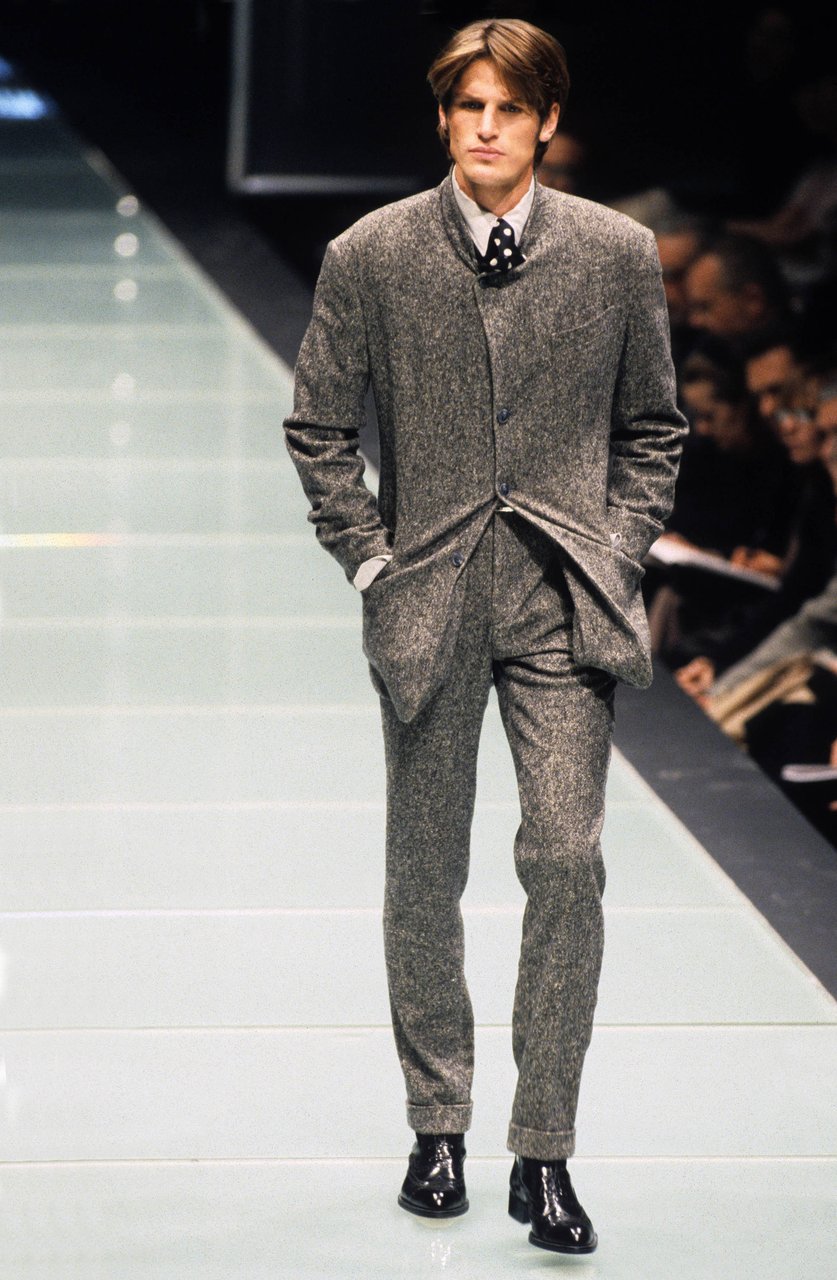
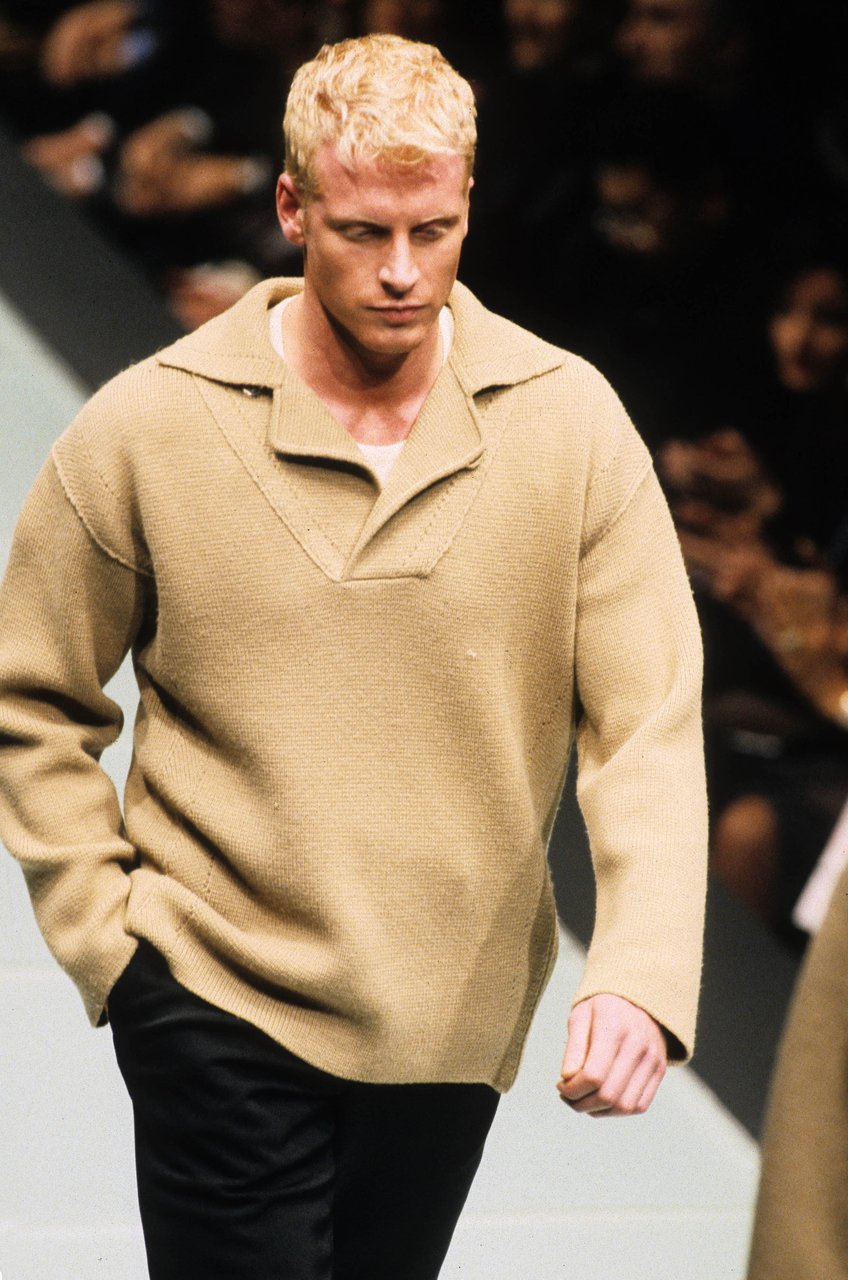
Colour. Belonging to the traditional vocabulary of men’s dress: honeyed neutrals; ink blue for stretch pinstripes; shadowed browns for fuller materials; dark, opaque tones recalling undergrowth and marshland for brushed fabrics and washed alpaca; ivory and black for checks, tweeds and English-style pindots.
Substance. Materials are full-bodied, often compact: double flannel, brushed on both sides; flannel backed with silk and viscose, fluid in wear. Knitwear is dense through fulling. Camel-hair fabric stitch for pullovers of the simplest line. Regimentals that respect tradition, with grosgrain and melton bands applied to fabric-stitch sweaters.
Excerpts from the collection press release