

Men's Ready-to-wear
Spring/Summer
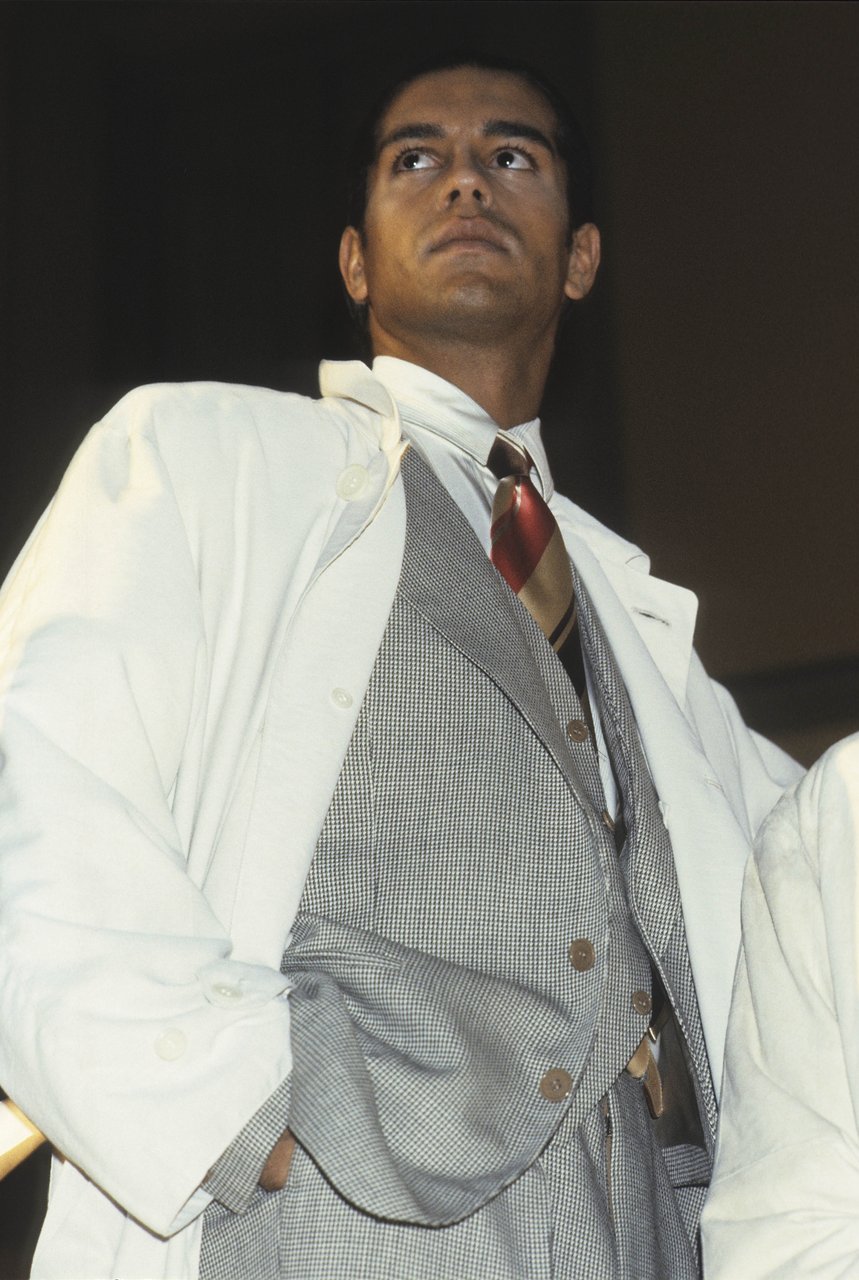
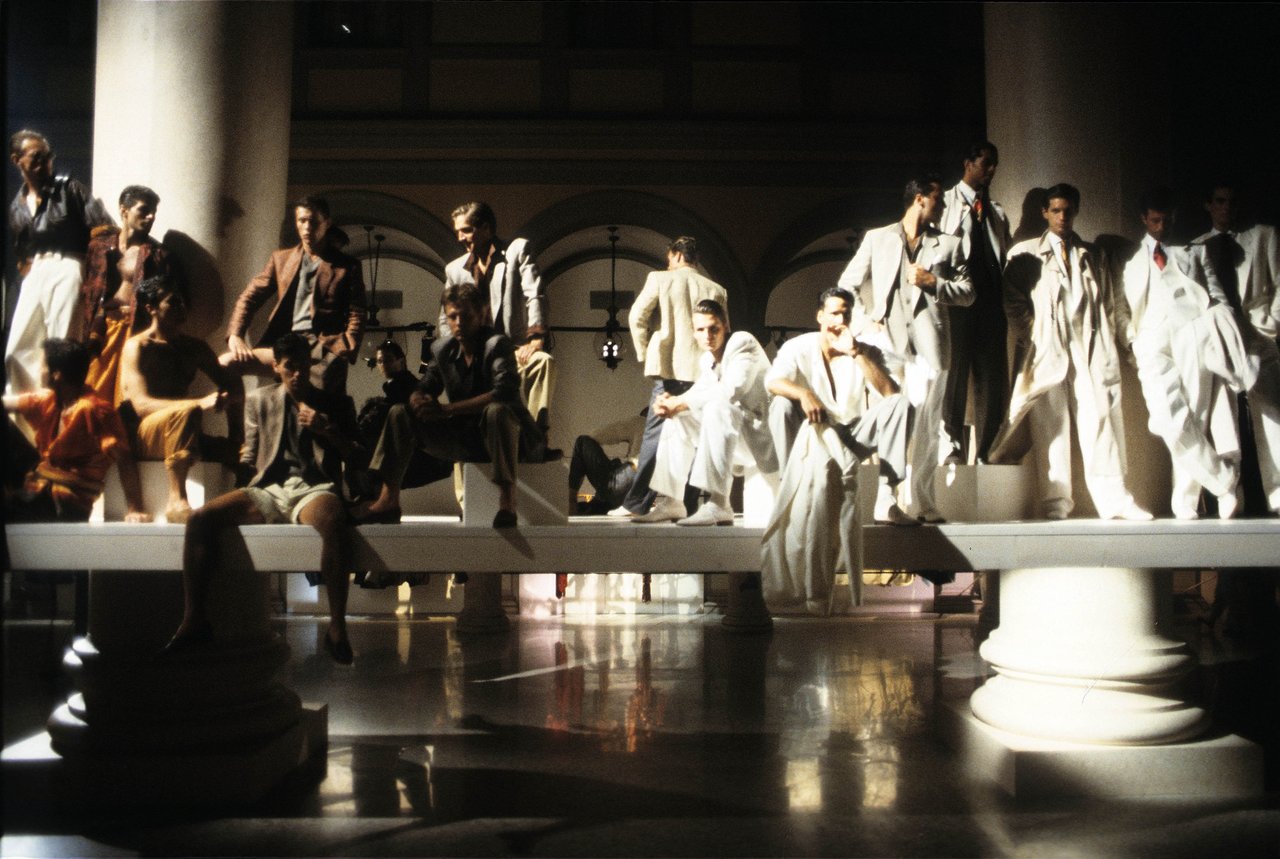
“I followed a guiding thread, a key word: simplification, comfort. Comfort of elementary structures, of deconstructed forms, of unusual fabrics: doubled cotton flock; linen and silk in English twist to create airy weaves; naturally elastic, soft crêpe; supple ottoman, as for ties. A great deal of pure silk mixed with rayon and wool, for knitwear with a different hand and drape. No constraint, no obligation other than that of intelligence and good habits. Because the man who wears Ferré practises a ritual that is now well established – he knows how to move. He does not need anyone to tell him when to put on a blue pullover”.
Gianfranco Ferré
1985
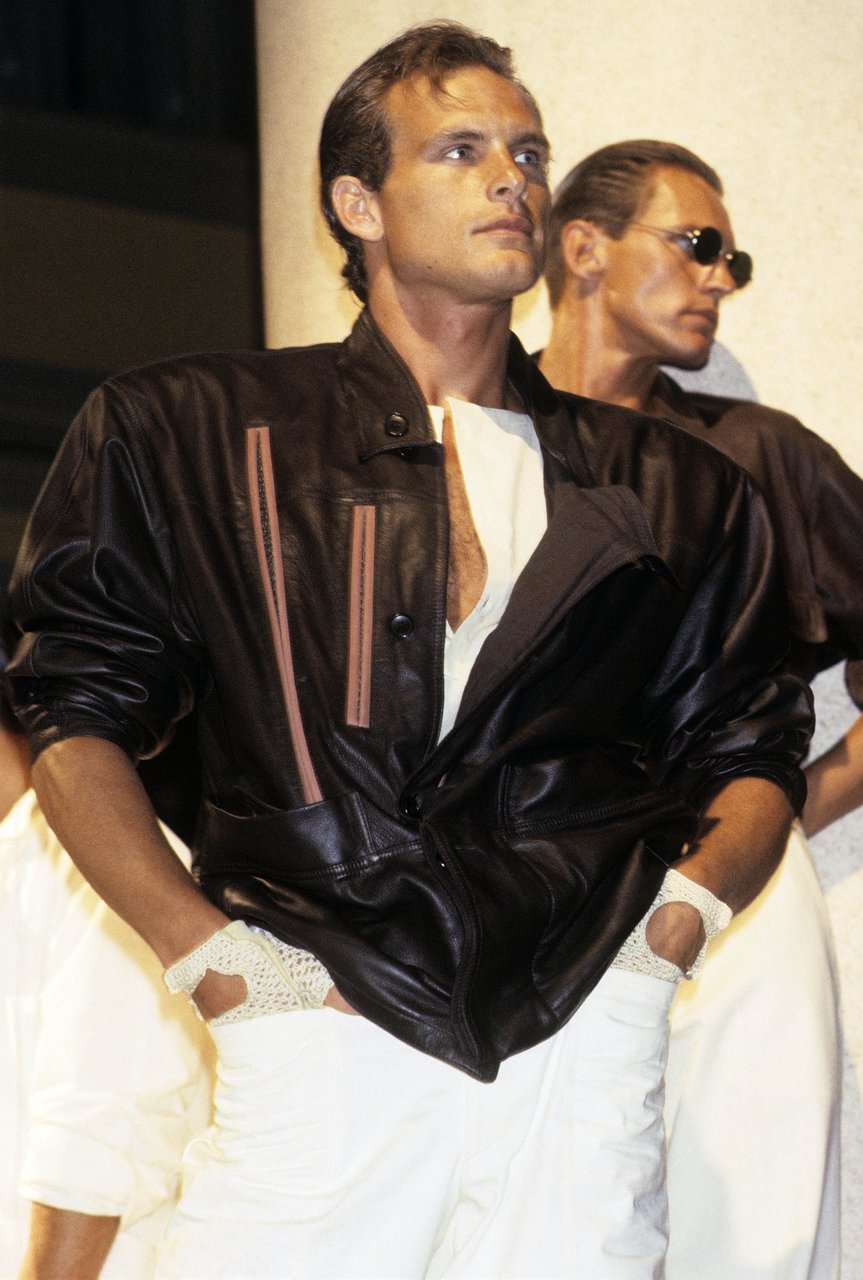
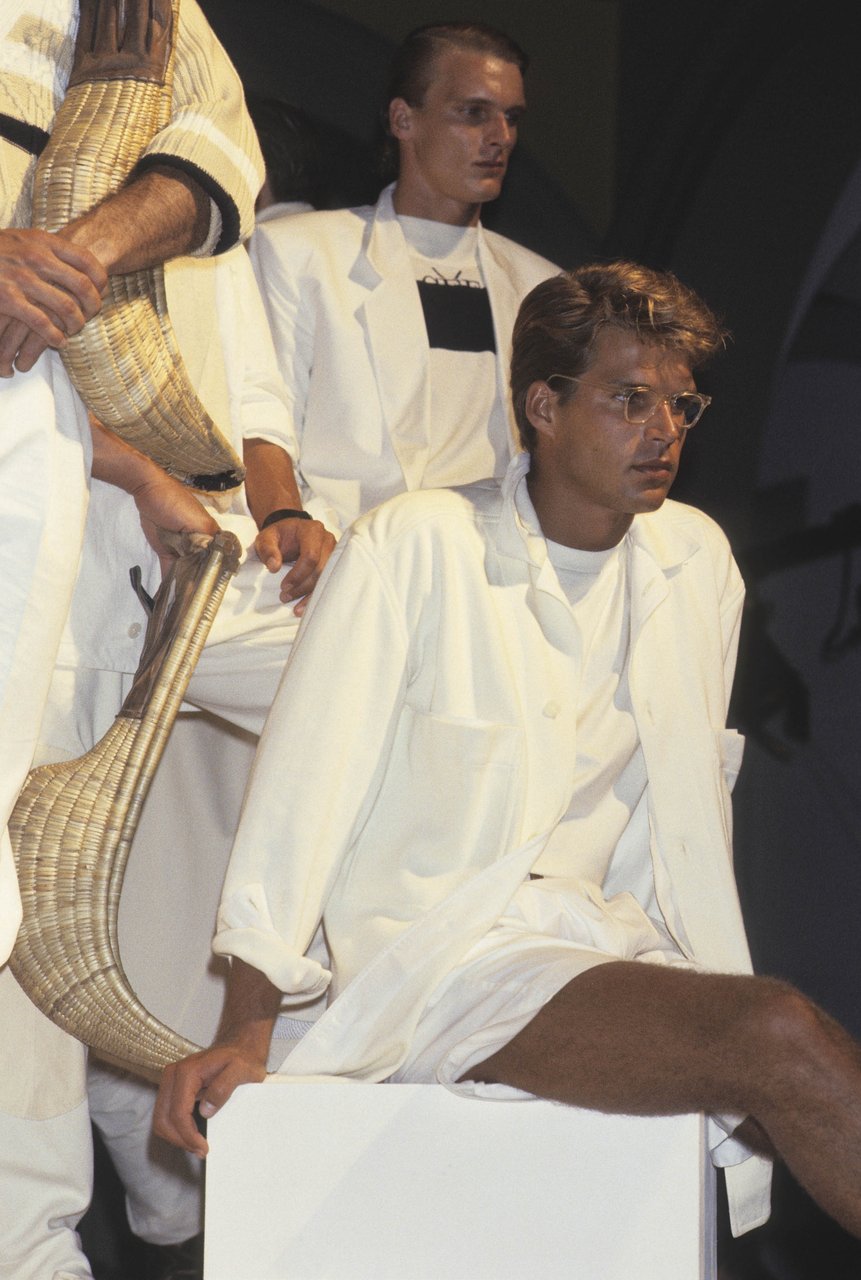
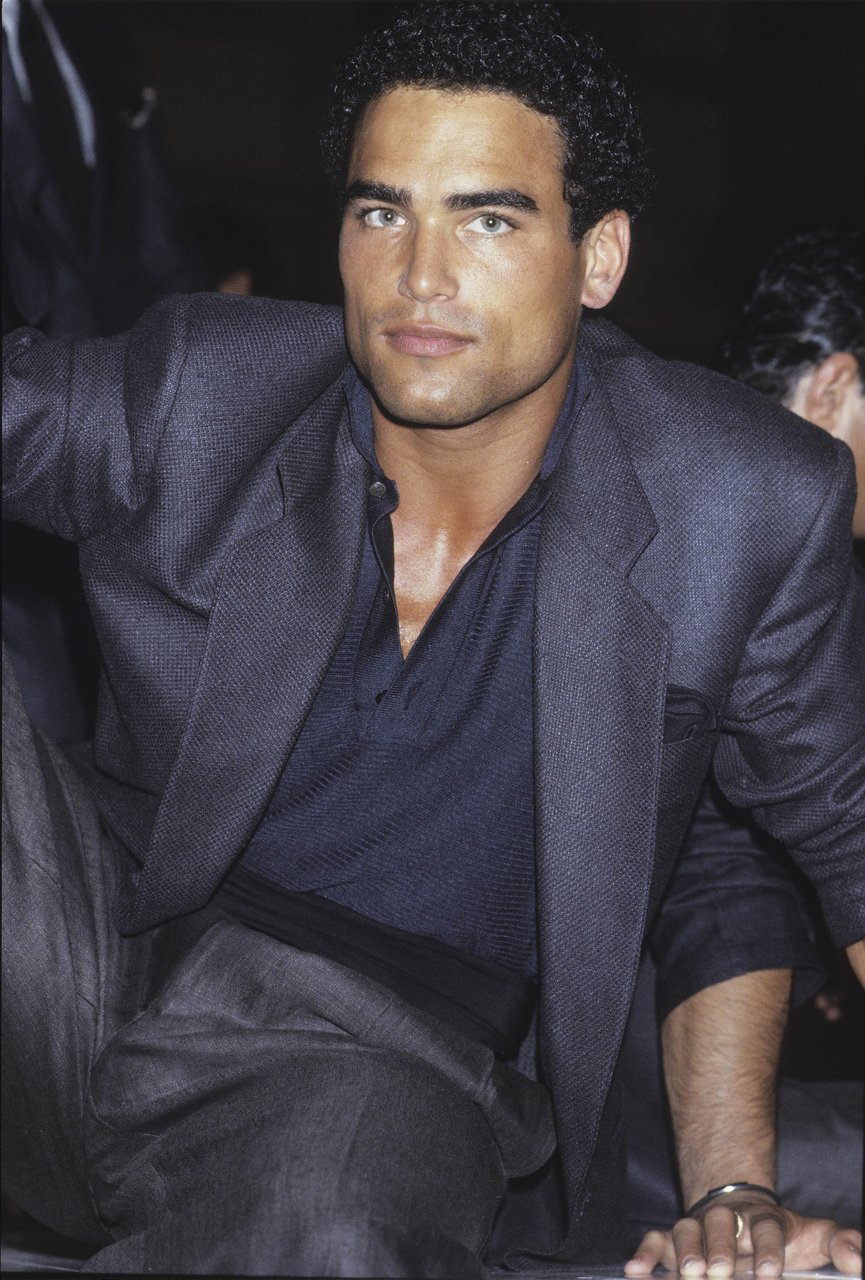
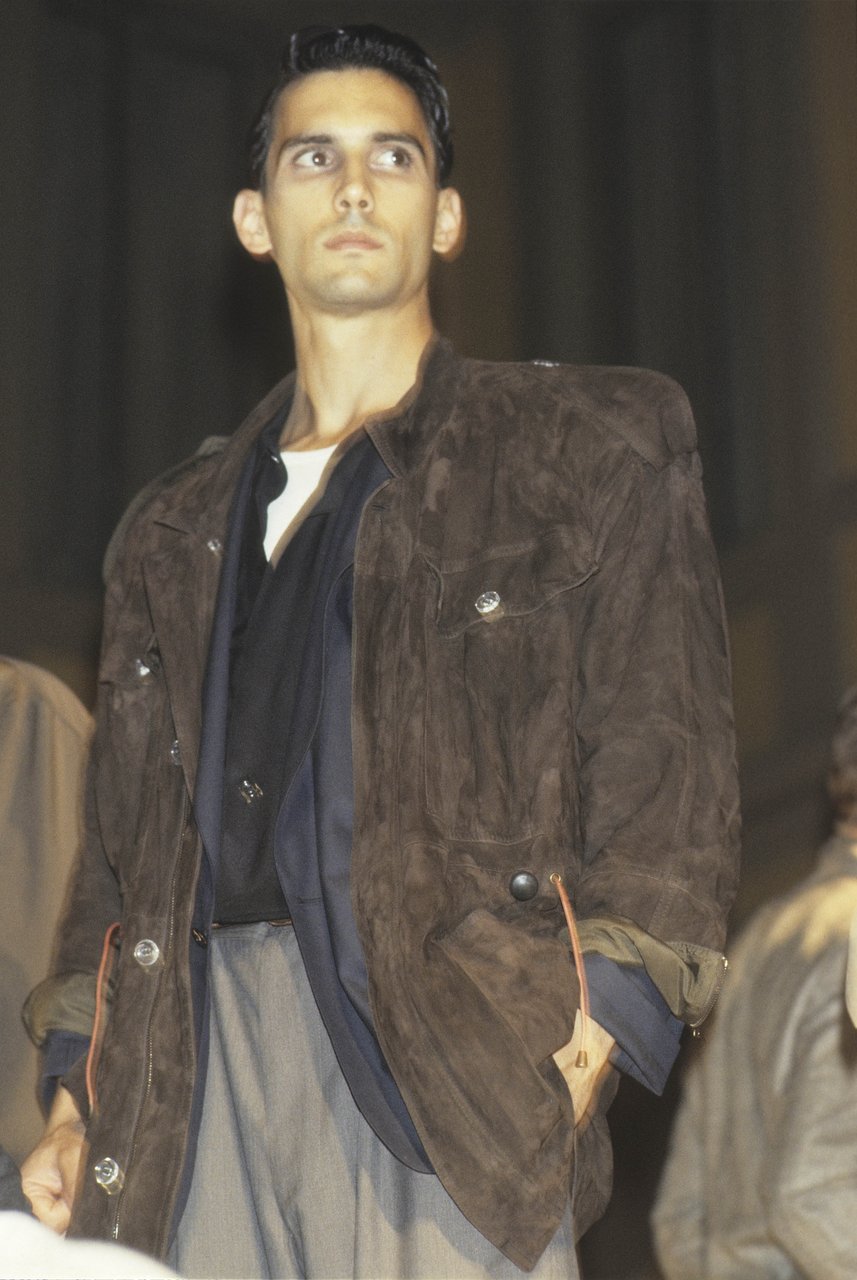
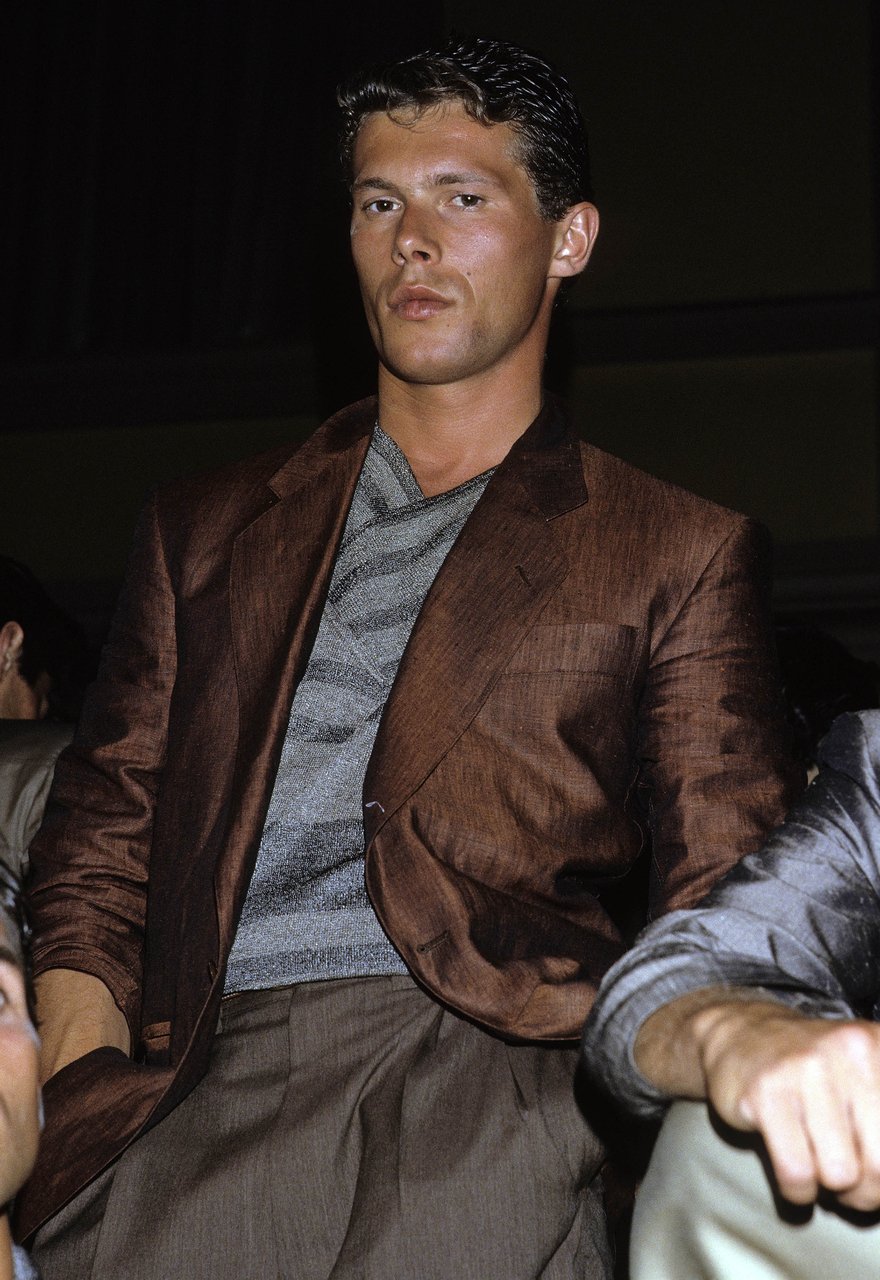
Observing fabrics. Cool wool and mohair for all garments, even bermuda shorts. Synthetics used to obtain a particular softness – as in viscose ottoman for Saharan jackets. Cotton interlock, knit weight, for suede blousons. Silk poplin.
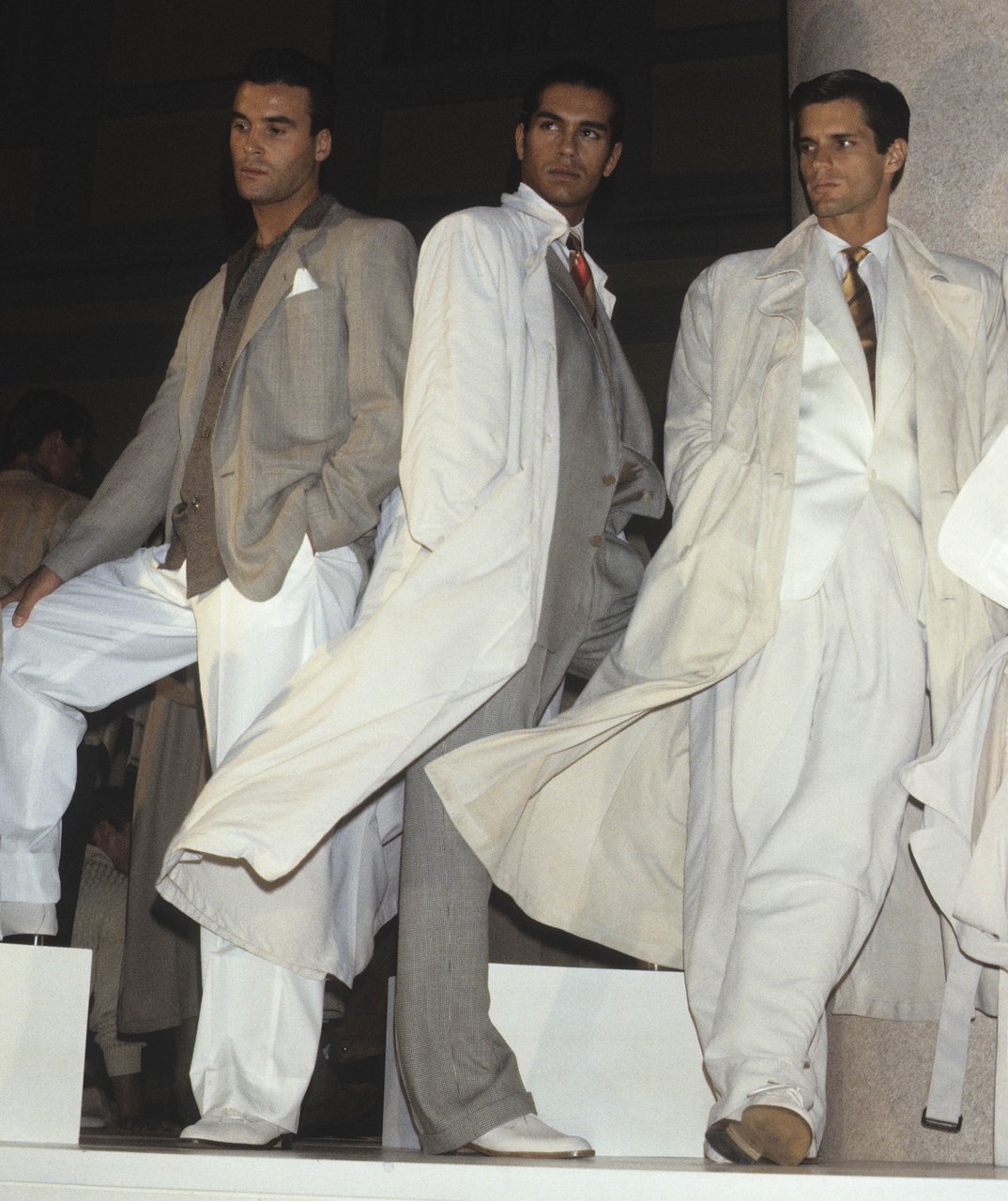
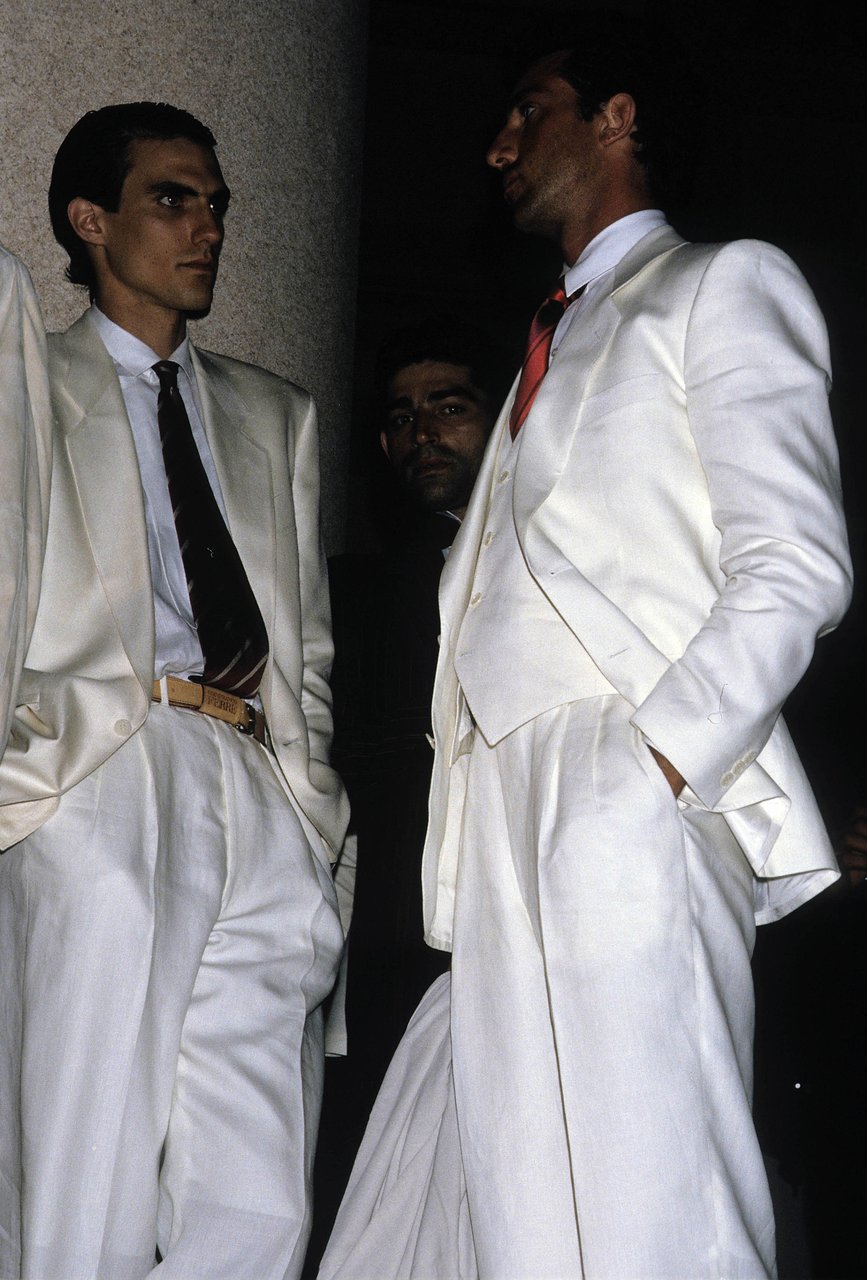
Re-seeing colours. Indefinite whites, dusty neutrals, brown invaded by very dark blue. On the beach, Egyptian batik motifs. Sunlit shifts: white turns and becomes cream. Vague yellow tones.
Controlling jackets. From structured blazers (normal yet comfortable shoulders) to ultra-soft Saharans, with wide pockets and opening gussets.
Renewed attention to trousers. Rediscovering old iridescent cottons for universal trousers.
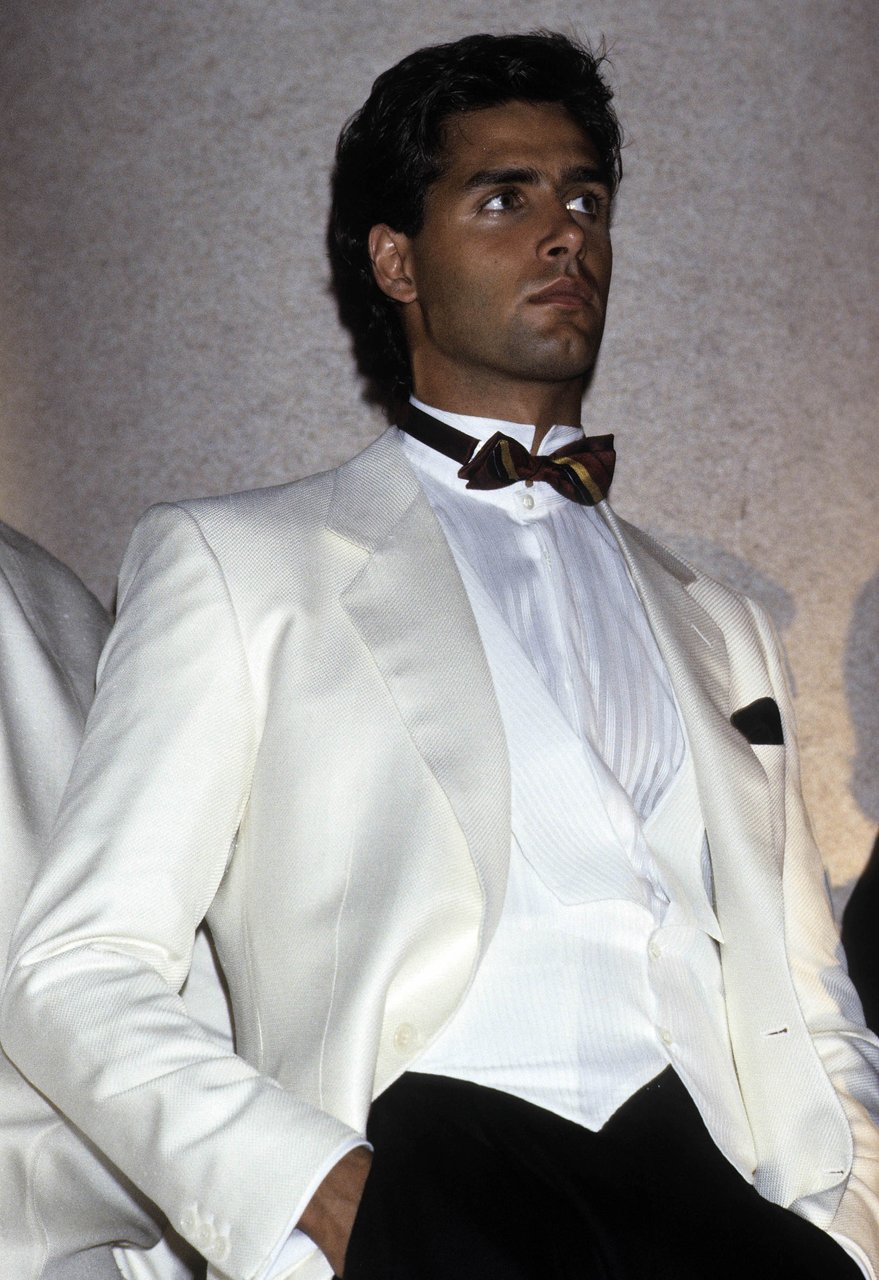
Evening. White tuxedos, black tuxedos. Blue or black jackets worn with silk tricot polos. Very dark regimentals, from country club to the tropics.
Excerpts from the collection press release
Men's Ready-to-wear
Fall/Winter
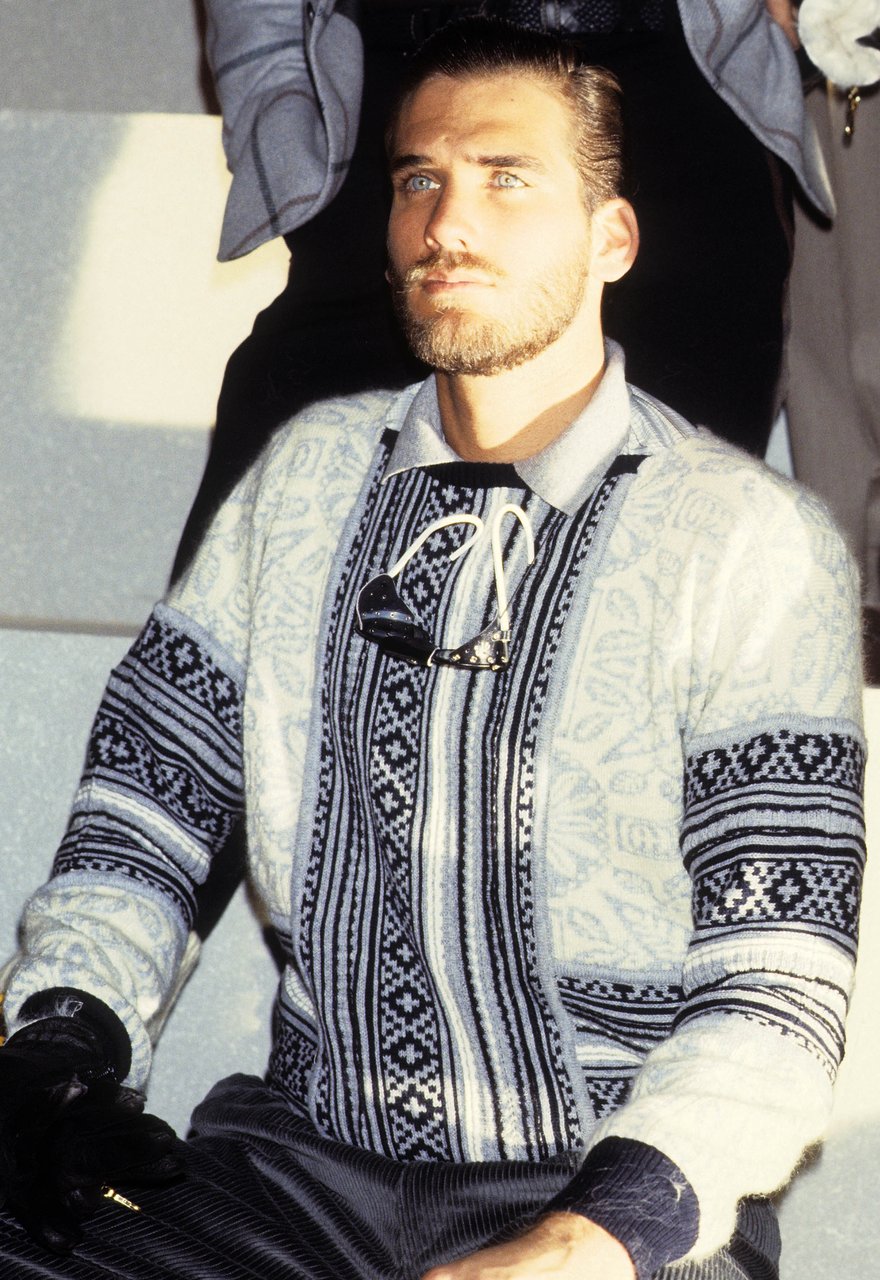
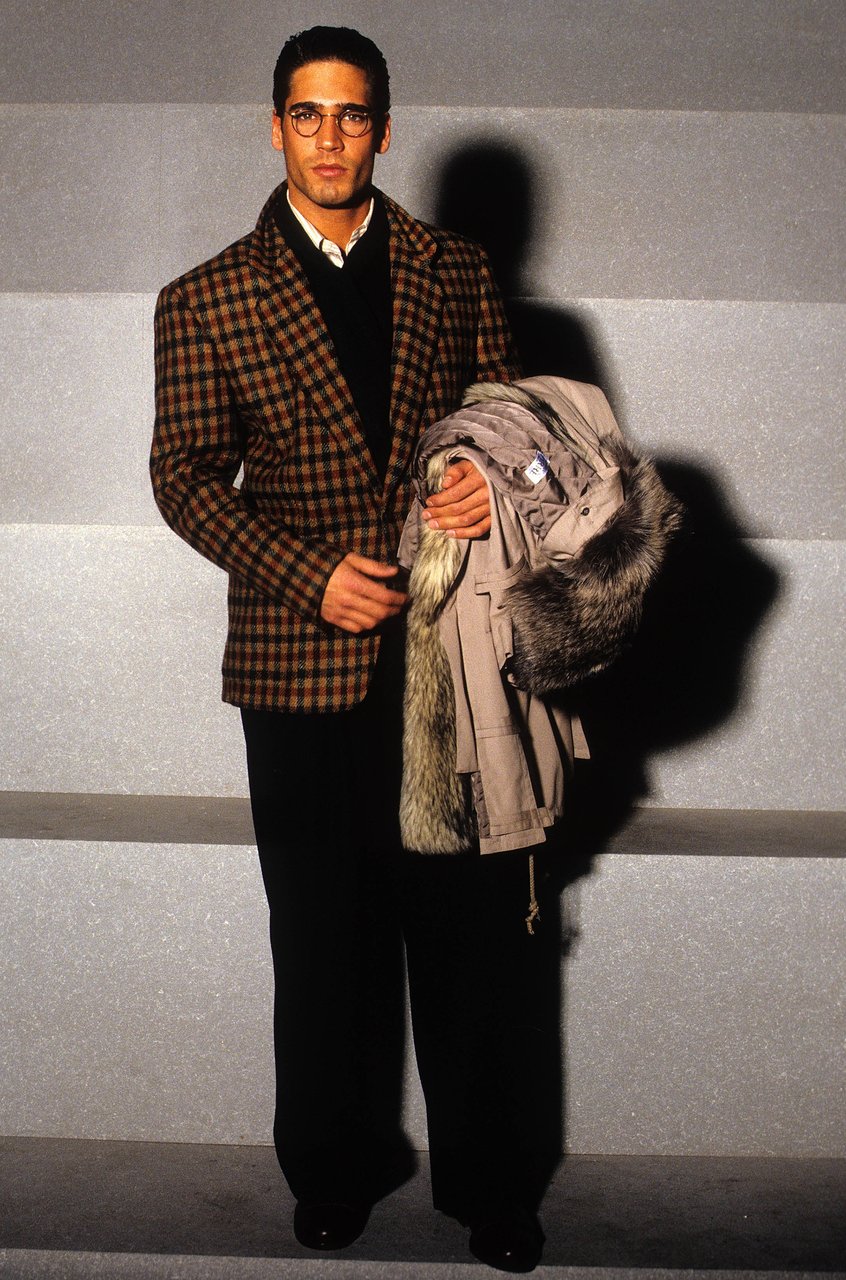
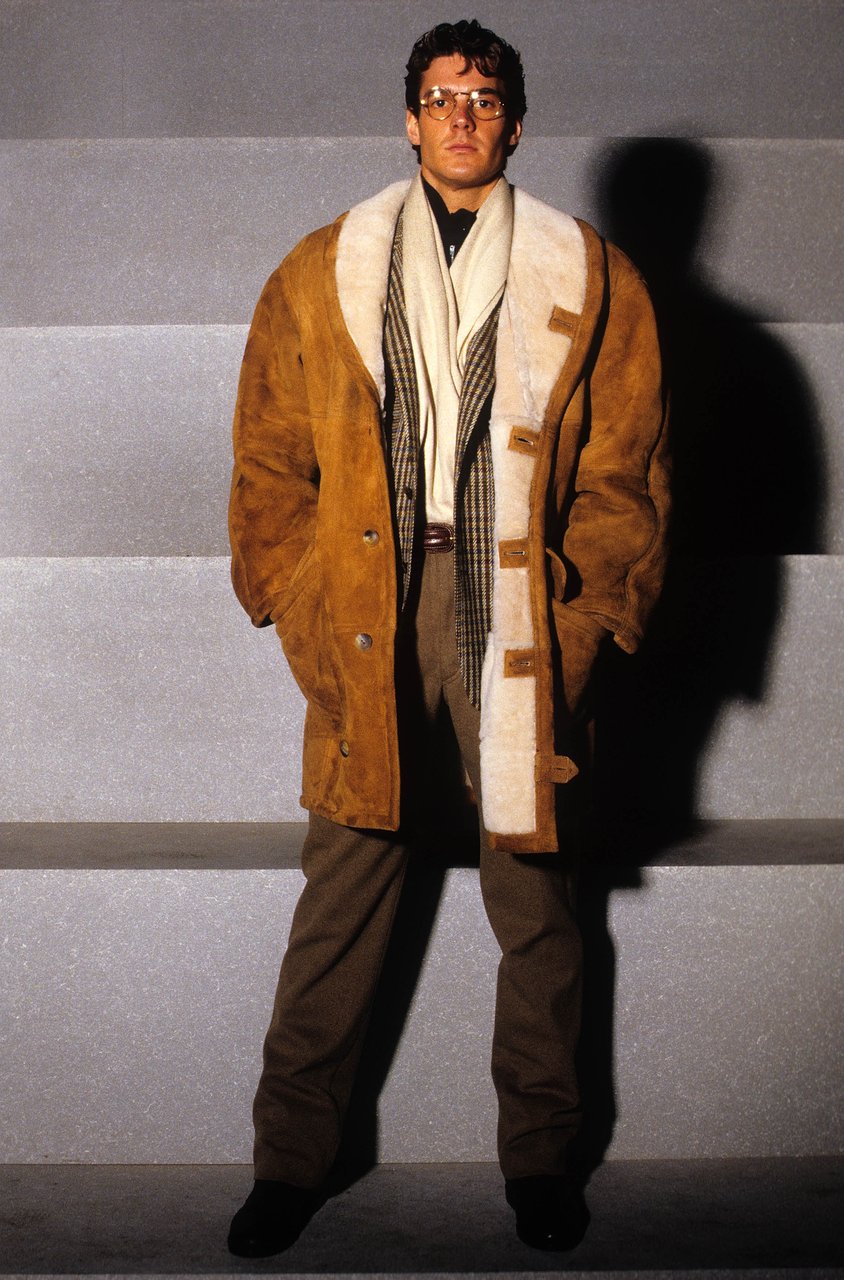
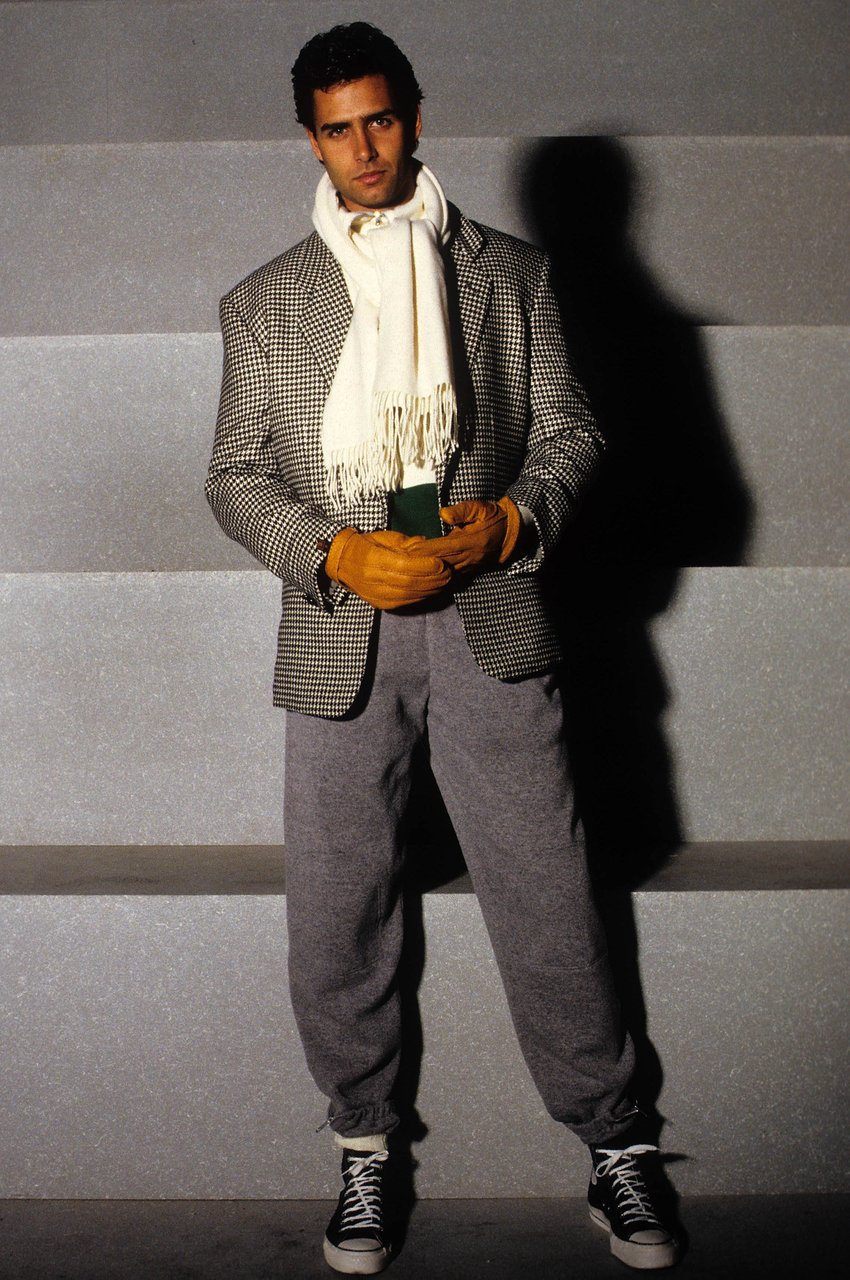
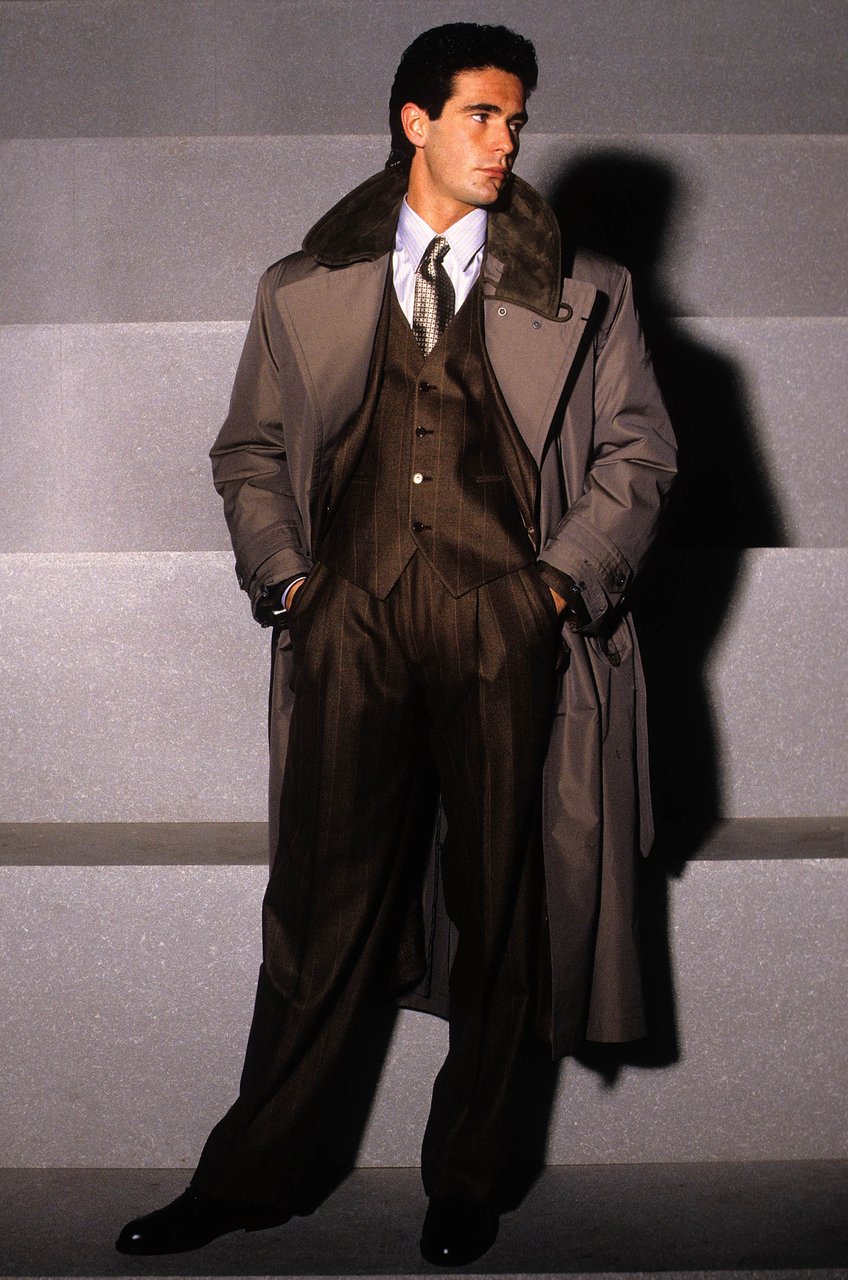
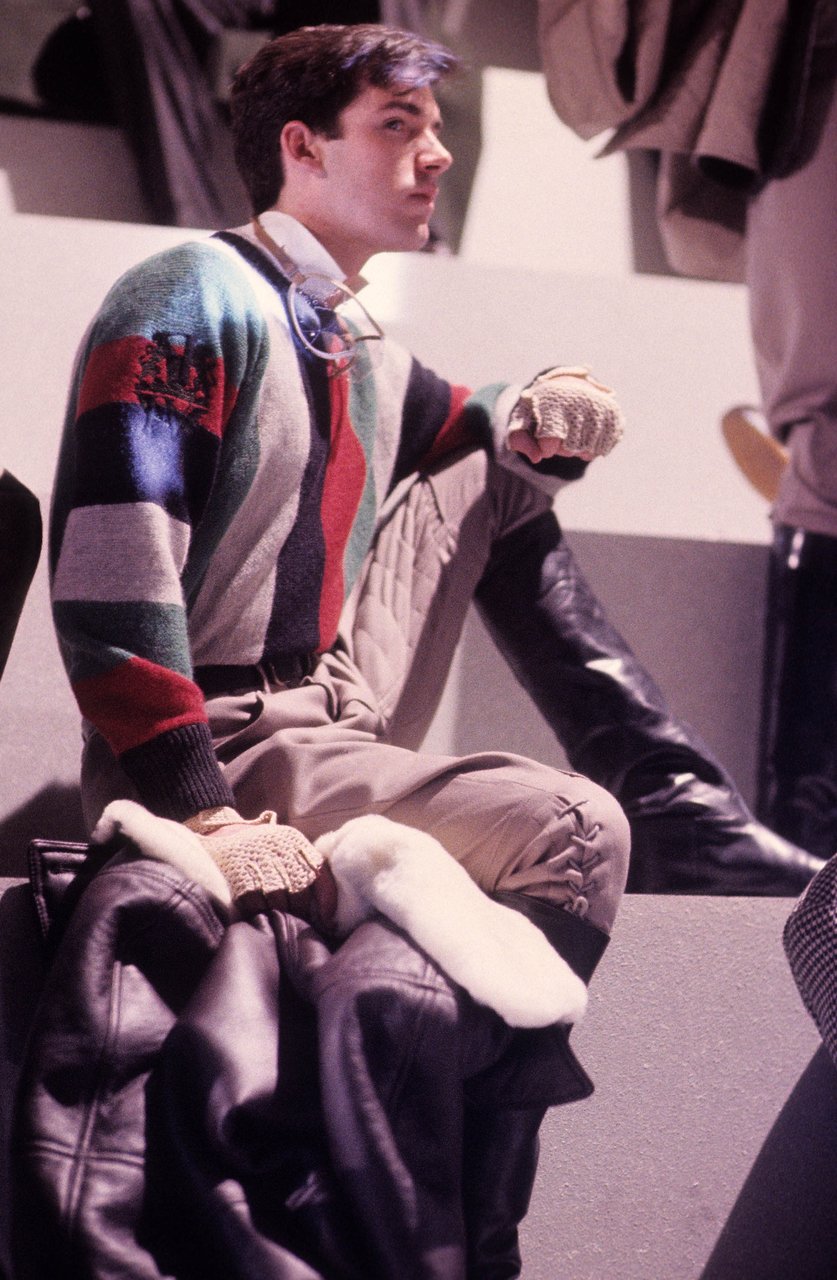
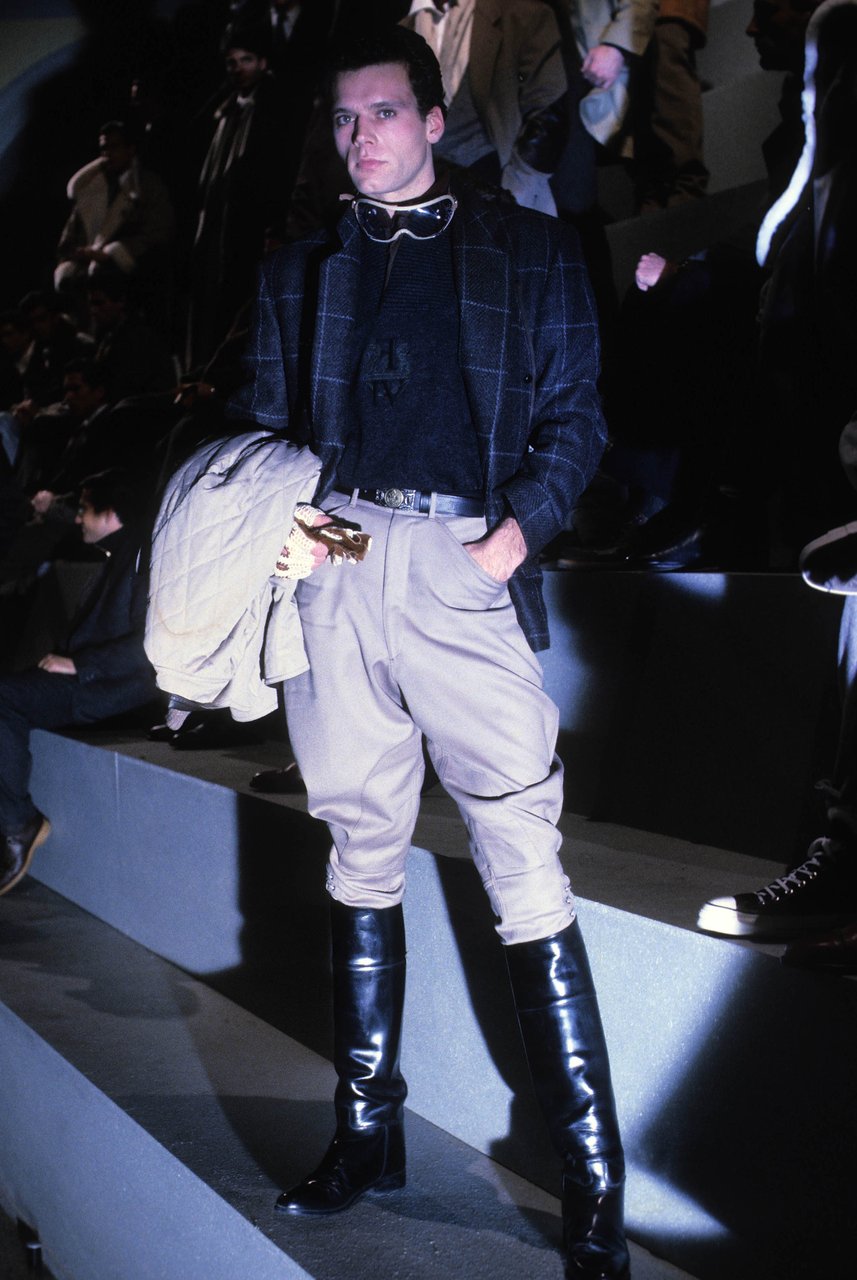
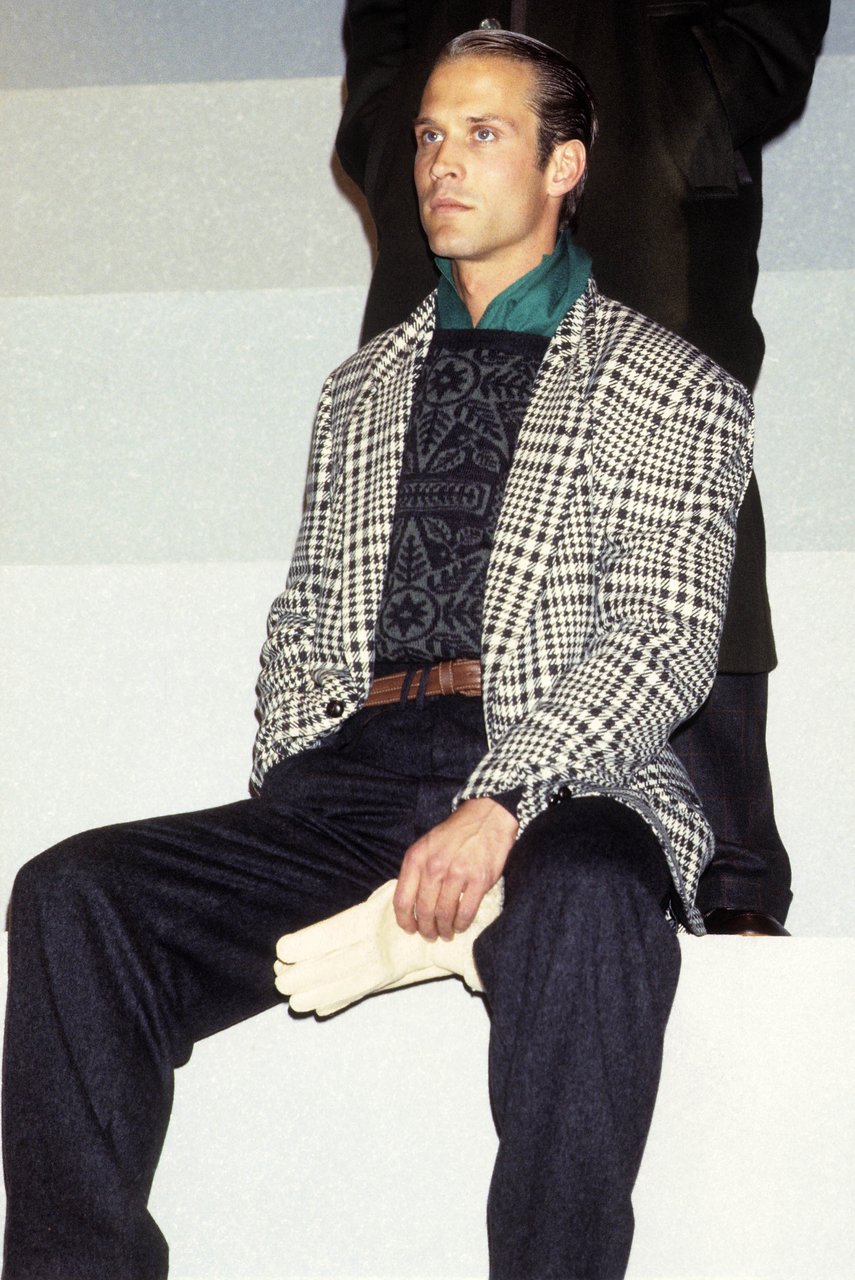
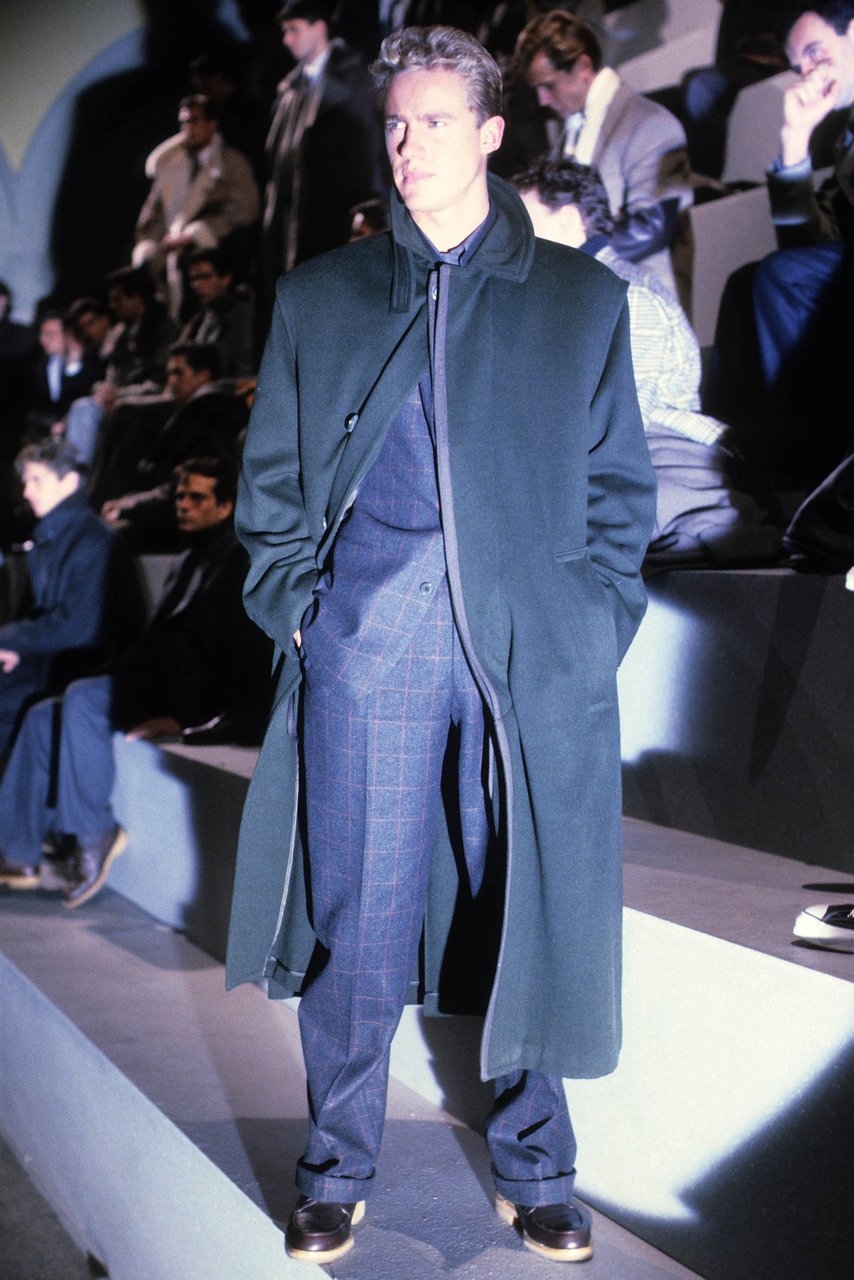
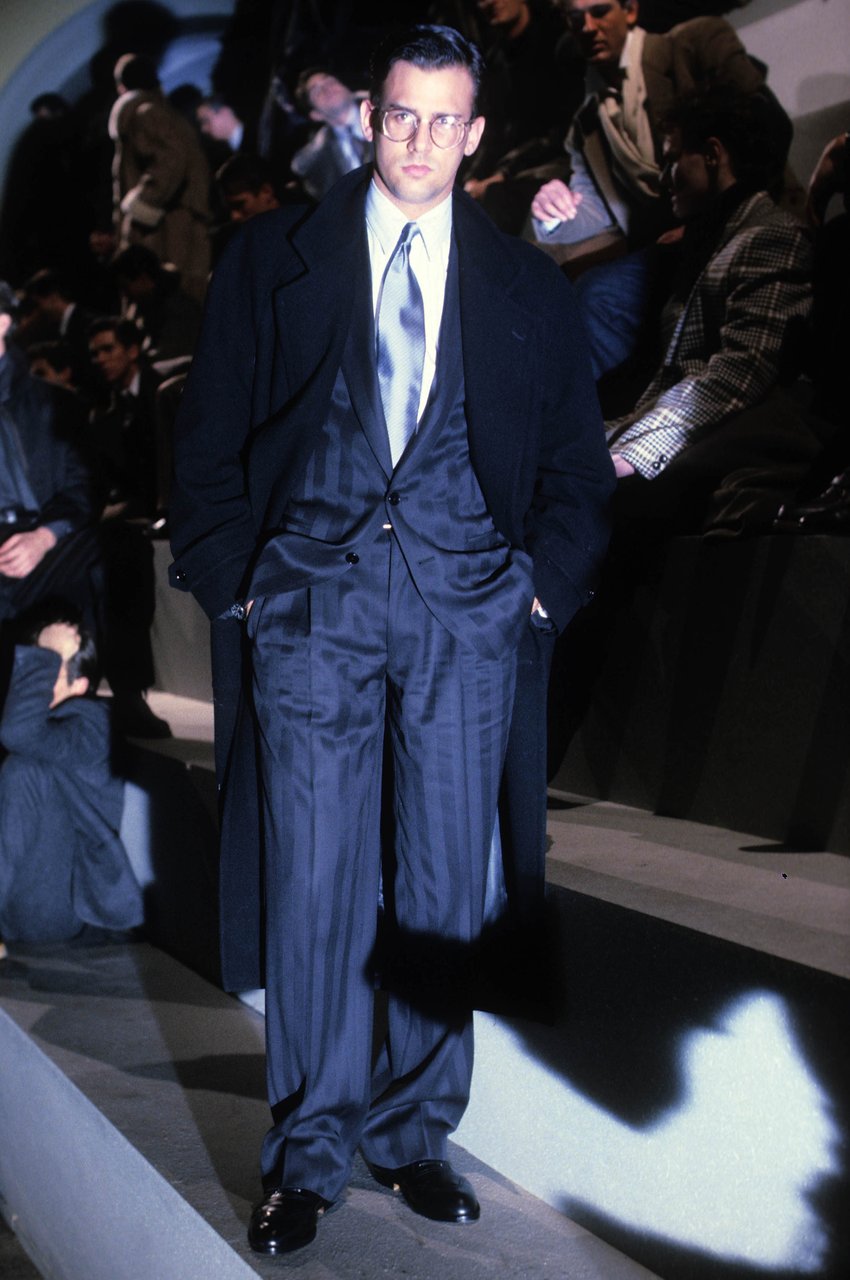
“I have no ready-made definitions; I did not rely on any particular suggestions. By removing, pruning, eliminating, I arrived at a line that is increasingly clean, increasingly pure – a conception of dressing as a choice of being, not of presenting oneself to others. And I marked tradition in a decisive way: if there are reasons, they must be clear and precise; if one takes liberties, they must not be softened by compromise. Without insisting on new transformations for the mere duty of making fashion. In this way, fixed elements can reappear, repeated frankly year after year, yet interpreted with the taste of the moment: more substantial fabrics, a real sense of physical presence”.
Gianfranco Ferré
1985
Flannels, super-soft flannels, responsive, yet always full-bodied. Loden treated to eliminate its roughness: for jackets, jeans and overcoats. A coarse brushed melton, highly elastic: for nikis, zipped pullovers, high-protection linings.
Border seams, avoiding double stitching so as not to flatten or crush the fabric – including in trouser pockets.
Floating-thread workmanship, typical of late nineteenth-century fabrics. Stripe effects – sharp or broken, brilliant and extremely fine. Genuine suede, mottled, pulled, worn, in neutral tones. Linings: quilted, tartan, or fur, with small wolf or marmot collars. Shearling overcoats in opaque, faded shades.
Ranges of greys diluted into unusual pale blues, English tones with darker, more decisive accents. Ranges of darkened greens, with brilliant touches.
Excerpts from the collection press release